
The Crucial ESA Letter Scam Warning: How to Protect Your Housing Rights
The Crucial ESA Letter Scam Warning: How to Protect Your Housing Rights
The bond between a person and their emotional support animal (ESA) is a vital part of mental health treatment. Under the Fair Housing Act (FHA), this bond is legally protected, allowing individuals with disabilities to live with their animals even in “no-pet” housing. However, as the demand for these protections has grown, so has a predatory industry of fraudulent websites.
A serious ESA letter scam warning is currently in effect for anyone seeking housing accommodations. Thousands of pet owners are being misled by “instant” certificates and “official” registries that hold zero legal value. When these documents are presented to savvy landlords, they are immediately rejected, leaving the tenant at risk of extra fees, lease denial, or even eviction.
At Perfect ESA Letter, we prioritize legal compliance and clinical integrity. We ensure you are connected with state-licensed professionals to provide documentation that stands up to scrutiny. To avoid the pitfalls of fraudulent sites, apply for an ESA letter now and start a legitimate evaluation today.
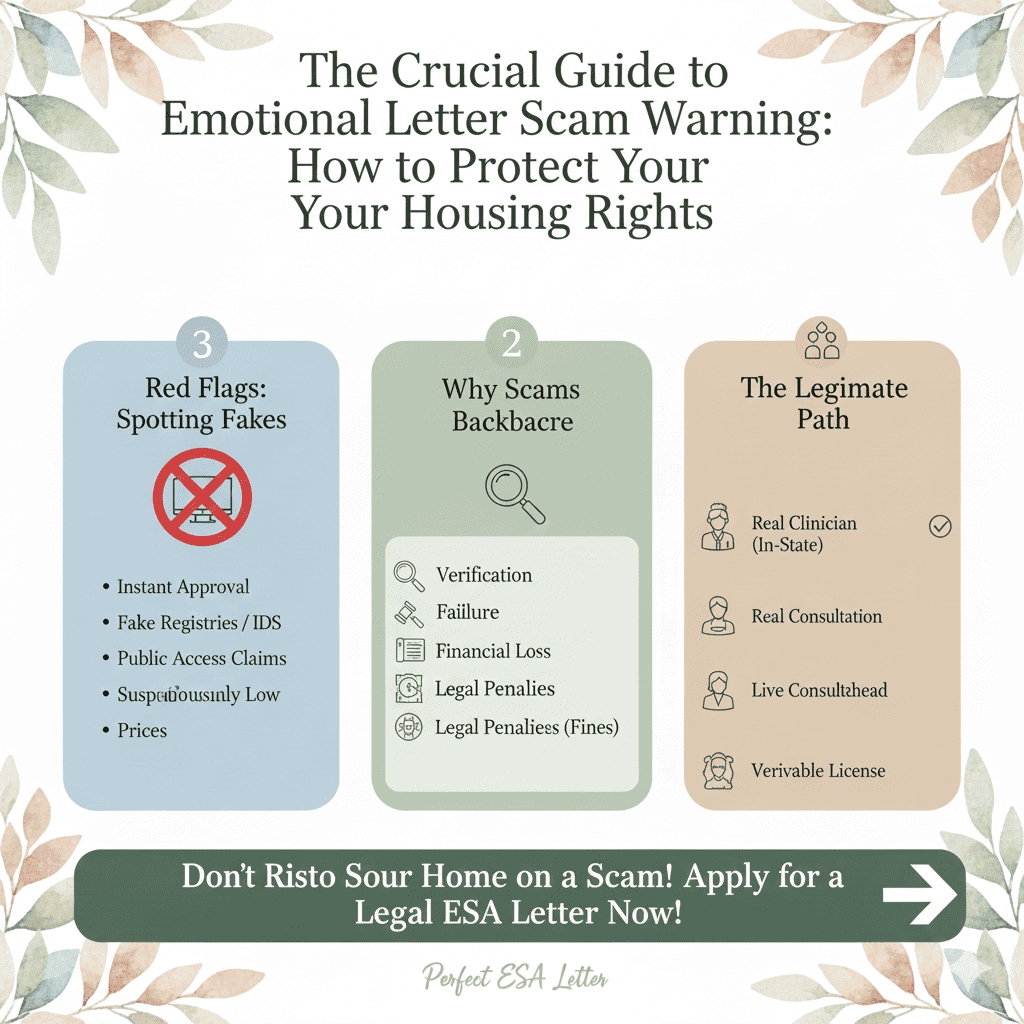
The Red Flags: How to Spot an ESA Letter Scam
Scammers have become sophisticated, often using official-looking seals and legal jargon to mimic government agencies. To protect yourself, watch out for these high-risk warning signs:
1. “Instant” Approvals or 5-Minute Questionnaires
A legitimate ESA letter is a medical recommendation. It requires an evaluation by a Licensed Mental Health Professional (LMHP). Any site that promises a letter within minutes of completing a simple automated quiz is a scam. HUD guidelines explicitly state that documentation from the internet is insufficient unless the provider has “personal knowledge” of the individual.
2. Mention of “Registries” or “Certificates”
This is the most common ESA letter scam warning. There is no such thing as a “legally recognized” national ESA registry. Websites that sell “lifetime registration” or “official ESA certificates” are selling worthless paper. Under the FHA, only a signed letter from a licensed professional counts as valid documentation.
3. Promises of “Public Access” Rights
If a website claims their ESA letter will allow you to take your animal into restaurants, grocery stores, or hotels, they are lying. Emotional Support Animals only have legal protections in housing. Only task-trained Service Dogs have public access rights under the Americans with Disabilities Act (ADA).
4. Suspiciously Low Prices
Legitimate services must pay licensed clinicians for their time and expertise. If you see an offer for a $49 “all-inclusive” ESA package, it is likely a “letter mill” that uses forged signatures or out-of-state licenses that landlords will quickly flag.
Why Fake ESA Letters Backfire with Landlords
Landlords and property managers are now more educated than ever on how to verify assistance animal requests. Presenting a fake letter doesn’t just result in a “no”; it can have long-lasting consequences.
| The Risk | The Consequence |
| Verification Failure | Landlords often check the clinician’s license number in state databases. If it’s fake or expired, your request is denied. |
| Financial Loss | Scammers do not offer refunds once your “certificate” is rejected. |
| Legal Penalties | In states like California, Florida, and Texas, misrepresenting an ESA can result in civil fines or even criminal misdemeanor charges. |
| Eviction Risk | If a landlord discovers you submitted fraudulent documents, it may be considered a breach of lease. |
State-Specific Compliance: What You Need to Know
A major part of any ESA letter scam warning involves state-specific laws. Fraudulent sites often ignore these, but landlords do not.
-
California & Montana: These states require a 30-day established relationship between the patient and the clinician before an ESA letter can be issued.
-
Provider Location: In almost every state, the clinician must be licensed in the state where the tenant resides. If you live in New York and your “online doctor” is only licensed in Florida, your letter is likely invalid.
The Correct Way to Get a Legitimate ESA Letter
To ensure your documentation is 100% compliant with HUD and FHA standards, follow this professional checklist:
-
Check for a Real Clinician: Ensure the service connects you with an LMHP (Psychologist, LCSW, LMFT, etc.) who is licensed in your state.
-
Verify the License: Once you receive your letter, look up the provider’s license on your state’s official verification portal.
-
Confirm the Content: A real letter must be on official letterhead, signed and dated, and must state that you have a disability-related need for the animal without disclosing your private diagnosis.
-
Expect a Consultation: Be prepared to discuss your mental health needs via a phone or video call. This “interactive process” is what makes the letter legally reliable.
Internal Linking & Compliance Resources
Frequently Asked Questions (FAQs)
What is the biggest ESA letter scam warning sign?
The biggest red flag is “registration.” If a site asks you to register your pet in a database or buy an ID card to make them “legal,” it is a scam. Only a letter from a licensed professional provides housing rights.
Can a landlord tell if an ESA letter is from a scam site?
Yes. Landlords often use “blacklists” of known letter mills. They also verify the clinician’s license number and check if the letter follows the specific formatting required by HUD.
Are online ESA letters always scams?
No. Telehealth is a perfectly legal way to receive a mental health evaluation. The key is ensuring the site connects you with a licensed professional for a real consultation rather than just selling you a template.
Do I need an ESA vest or tag?
No. Vests and tags are accessories and have no legal standing. Scammers often bundle these to make their service look more “official,” but a landlord only cares about the signed letter.
What happens if I accidentally used a scam site?
Stop using the document immediately. Presenting a fraudulent document can be considered “misrepresentation.” You should seek a legitimate evaluation from a licensed professional to rectify the situation.
How much should a legitimate ESA letter cost?
While prices vary, you should expect to pay for the clinician’s time. Extremely cheap letters (under $70) are usually fraudulent, while very expensive ones (over $300) may be overcharging.
Can a landlord require a “notarized” letter?
No. HUD guidelines state that a signed letter from a licensed professional is sufficient. Landlords cannot impose extra burdens like notarization or the disclosure of private medical records.
How do I verify my clinician’s license?
Every state has a “Search for a License” portal (usually under the Department of Health or Consumer Affairs). Simply enter the name or license number found on your ESA letter to confirm they are active and in good standing.
Conclusion: Don’t Risk Your Home on a Scam
Following this ESA letter scam warning is the best way to protect your mental health and your housing security. In the eyes of the law, there are no shortcuts to a reasonable accommodation. By choosing a service that values clinical standards over “instant” results, you ensure that you and your animal remain protected and respected by your housing provider.
Don’t become a victim of a letter mill.
Get a verifiable, clinician-backed ESA letter that protects your rights under the Fair Housing Act.