What Is an ESA Letter? Your Complete Guide to Legal Housing Protections
What Is an ESA Letter? Your Complete Guide to Legal Housing Protections
For many individuals living with mental or emotional health challenges, the companionship of an animal is a vital part of their treatment plan. However, navigating the rules of “no-pet” housing or expensive monthly fees can be a significant source of stress. This is where an Emotional Support Animal (ESA) letter becomes essential.
But what is an ESA letter exactly, and how does it differ from a standard doctor’s note or a pet registration? Understanding the legal framework behind these documents is the key to ensuring you and your animal are protected under federal law. This guide will walk you through the definition, the legal benefits, and the process of securing a legitimate letter that landlords must respect.
What Is an ESA Letter? The Official Definition
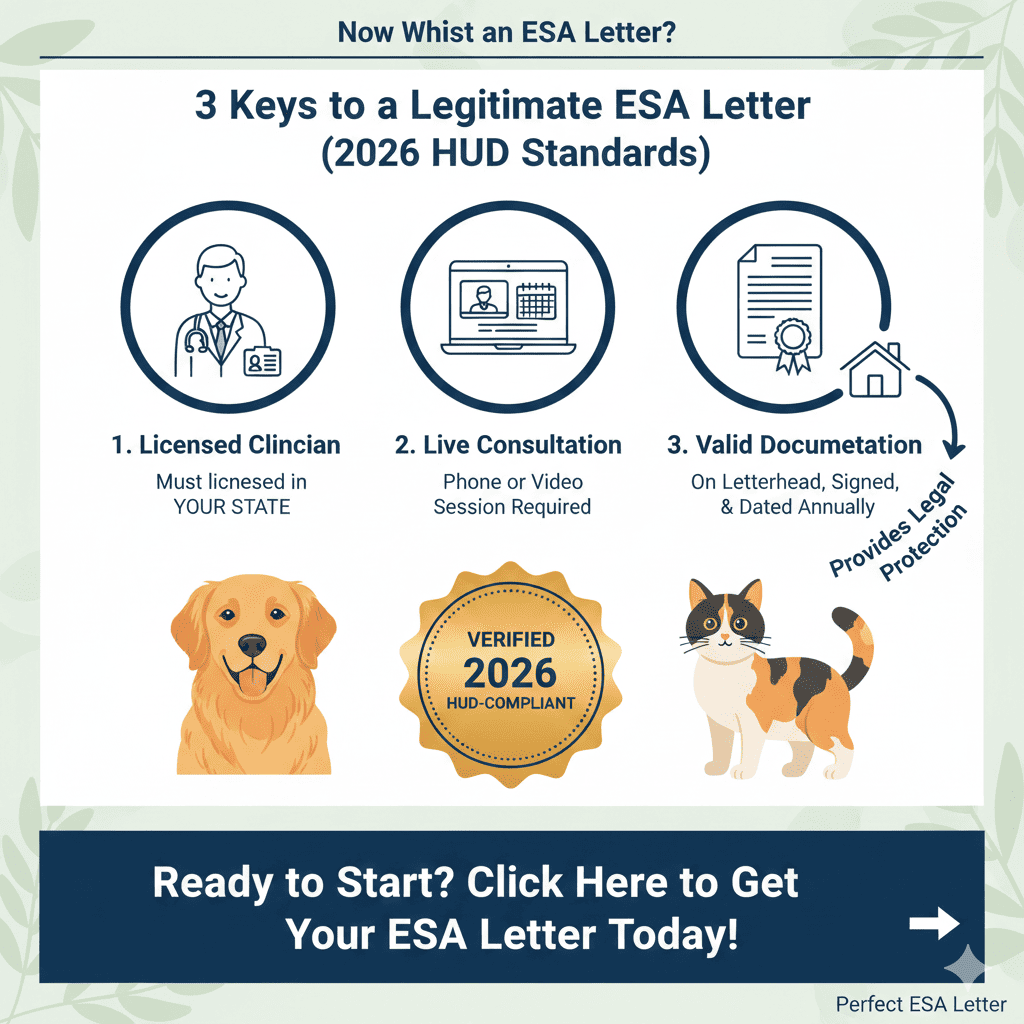
An ESA letter is an official document written and signed by a Licensed Mental Health Professional (LMHP). It serves as legal proof that an individual has a qualifying mental or emotional disability and that their animal provides a therapeutic benefit that alleviates at least one symptom of that disability.
Unlike service animals (which are trained to perform specific tasks, like leading the blind), an emotional support animal provides comfort through its presence alone. Because of this therapeutic role, the Fair Housing Act (FHA) classifies ESAs as “assistance animals” rather than pets.
What a Valid Letter Must Include:
-
Professional Letterhead: The document must be on the clinician’s official stationery.
-
Clinician Credentials: It must include the provider’s full name, license type (e.g., LCSW, LMFT, Psychologist), and license number.
-
State of Licensure: The professional must be licensed in your state of residence.
-
A Confirmation of Need: A statement confirming that you have a mental health-related disability and that the animal is a necessary part of your treatment.
-
Direct Contact Info: A phone number or email where the landlord can verify the letter’s authenticity.
The Legal Power of a Legitimate ESA Letter
When people ask “what is an ESA letter,” they are usually asking about the rights it grants them. Under the Fair Housing Act, a valid letter transforms your pet’s status in the eyes of the law, giving you several powerful protections:
1. Exemption from “No-Pet” Policies
Even if a building has a strict no-pet policy, a landlord must make a “reasonable accommodation” for an ESA. You cannot be denied housing based on the presence of your support animal.
2. Waiver of All Pet Fees
ESAs are not pets. Therefore, landlords cannot charge:
-
Pet Deposits: You are exempt from the standard $200–$500 upfront fee.
-
Pet Rent: You are exempt from monthly $25–$100 surcharges.
-
Application Fees: Landlords cannot charge a fee just to process your ESA request.
3. Protection Against Breed and Weight Restrictions
Many apartments have “aggressive breed” lists or weight limits (e.g., no dogs over 50 lbs). An ESA letter overrides these rules. As long as your specific animal is well-behaved and does not pose a direct threat, its breed and size cannot be used to deny you housing.
| Feature | Standard Pet | ESA with Valid Letter |
| Housing Protection | None | Federal Protection (FHA) |
| Pet Deposits | Required | Waived |
| Monthly Pet Rent | Required | Waived |
| Breed Bans | Applicable | Not Applicable |
Who Can Legally Write an ESA Letter?
You cannot write your own letter, and a letter from a veterinarian or a “pet trainer” will not be accepted by a landlord. To be legally compliant with HUD rules, the letter must come from a licensed healthcare professional, such as:
-
Licensed Clinical Social Workers (LCSW)
-
Licensed Marriage and Family Therapists (LMFT)
-
Psychologists
-
Psychiatrists
-
Licensed Professional Counselors (LPC)
-
Primary Care Physicians or Nurse Practitioners (in some cases)
At Perfect ESA Letter, we exclusively work with state-licensed mental health professionals who understand the specific legal requirements of the Fair Housing Act.
How the Process Works: From Inquiry to Approval
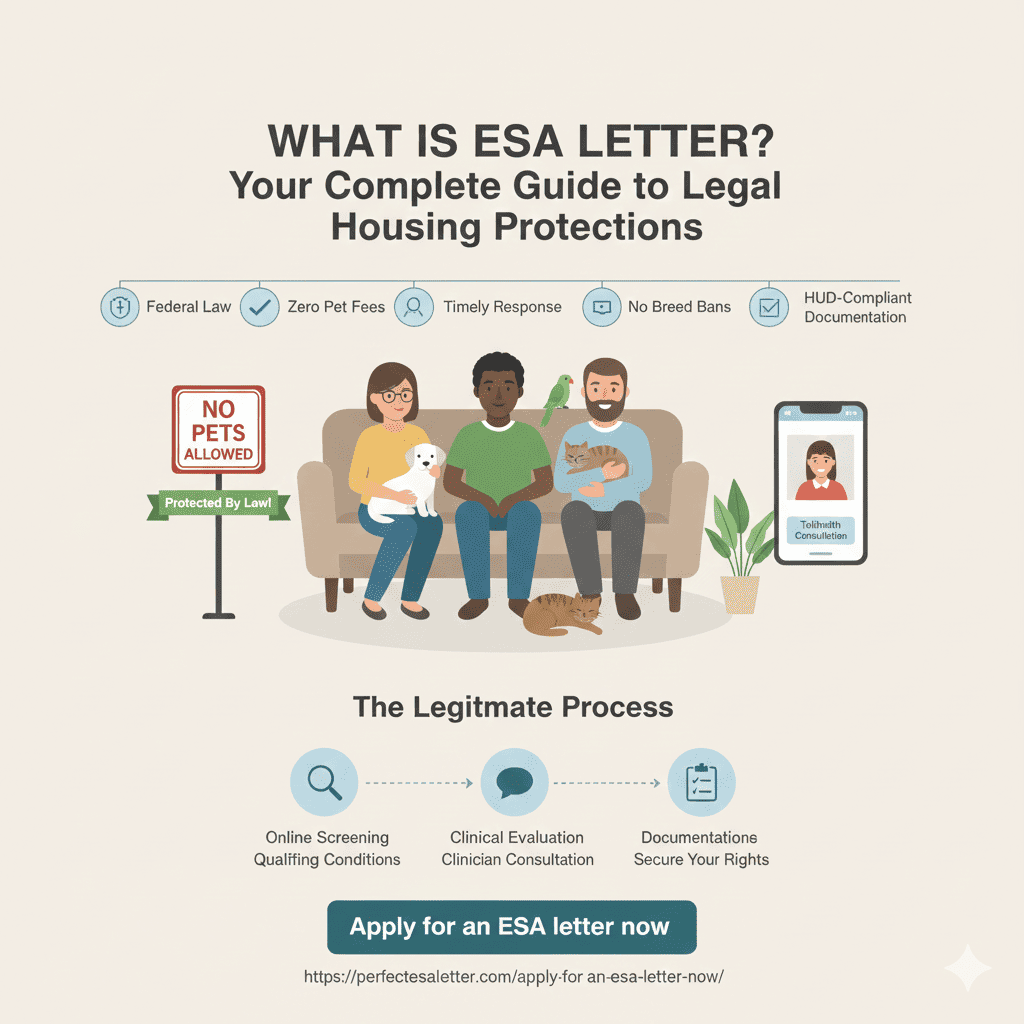
Getting your documentation doesn’t have to be a long, drawn-out process. Most legitimate services follow a simple, three-step clinical path:
-
Mental Health Assessment: You fill out a confidential questionnaire regarding your symptoms (anxiety, depression, PTSD, etc.) and how an animal helps you cope.
-
Live Consultation: You meet with a licensed clinician via phone or video chat. This is a critical step—HUD warns that “instant” letters without a consultation are often fraudulent.
-
Letter Issuance: If the clinician determines you qualify, they sign and send your official letter, usually in both digital and physical formats.
Common Misconceptions: What an ESA Letter Is NOT
To protect yourself from scams and legal trouble, it is important to know the limits of an ESA letter.
-
It is NOT a “Registration” or “Certificate”: There is no official government registry for ESAs. If a site sells you a plastic ID card or a certificate without a doctor’s consultation, it is a scam.
-
It is NOT Public Access: An ESA letter only grants you rights in housing. It does not allow you to take your dog into grocery stores, restaurants, or malls. Only service dogs have public access rights under the ADA.
-
It is NOT a Flight Permit: As of recent federal changes, airlines are no longer required to let ESAs fly for free. Most airlines now treat ESAs as standard pets in the cabin (fees may apply).
Internal Linking Suggestions
-
Anchor Text: how to qualify for an emotional support animal
-
Anchor Text: Fair Housing Act rules for landlords
-
Anchor Text: ESA letter for anxiety and depression
Frequently Asked Questions (FAQs)
1. Does my landlord have the right to see my medical records?
No. Your landlord can verify the letter and the clinician’s license, but they cannot ask for your specific diagnosis, medical history, or the details of your therapy sessions.
2. Can I have more than one ESA?
Yes, but your clinician must establish a therapeutic need for each individual animal. Your letter should specifically name and describe each animal covered by the accommodation.
3. What if I already live in the apartment?
You can request a reasonable accommodation at any time—whether you’re a new applicant or a tenant who has lived there for years. Your landlord must process the request once you provide the letter.
4. How long does the landlord have to respond?
HUD guidelines state that a housing provider should respond to an ESA request promptly, typically within 10 days of receiving the documentation.
5. Do I need to buy a vest or harness for my ESA?
No. While vests can help identify your animal to neighbors, they are not legally required. The only document that matters in the eyes of the law is the signed ESA letter.
6. Can a landlord deny my ESA if it’s “too big”?
No. Size and weight are not valid reasons for denial under the FHA. A landlord can only deny an ESA if the specific animal is destructive, dangerous, or creates an “undue financial burden” (which is rare).
7. Does an ESA letter expire?
While the FHA doesn’t list an expiration date, most landlords require a letter that is no more than one year old to ensure the medical need is current. It is best practice to renew your letter annually.
8. What if my clinician is not in my city?
That is perfectly fine. As long as the clinician is licensed in your state, the letter is valid. Telehealth is a fully recognized method for establishing a patient-provider relationship for ESAs.
Protect Your Bond and Your Housing Rights
Understanding what is an ESA letter is the first step toward living a more stable, stress-free life with your animal companion. These documents are more than just paperwork; they are a legal shield that ensures your mental health needs are respected by housing providers.
Don’t risk your housing security on “instant” scams or unverified registries. By choosing a clinical path with licensed professionals, you ensure that your letter is 100% HUD-compliant and legally undisputable.
At Perfect ESA Letter, we are dedicated to helping you navigate the requirements of the Fair Housing Act with ease. Our network of state-licensed clinicians is ready to evaluate your needs and provide the professional documentation you deserve.