
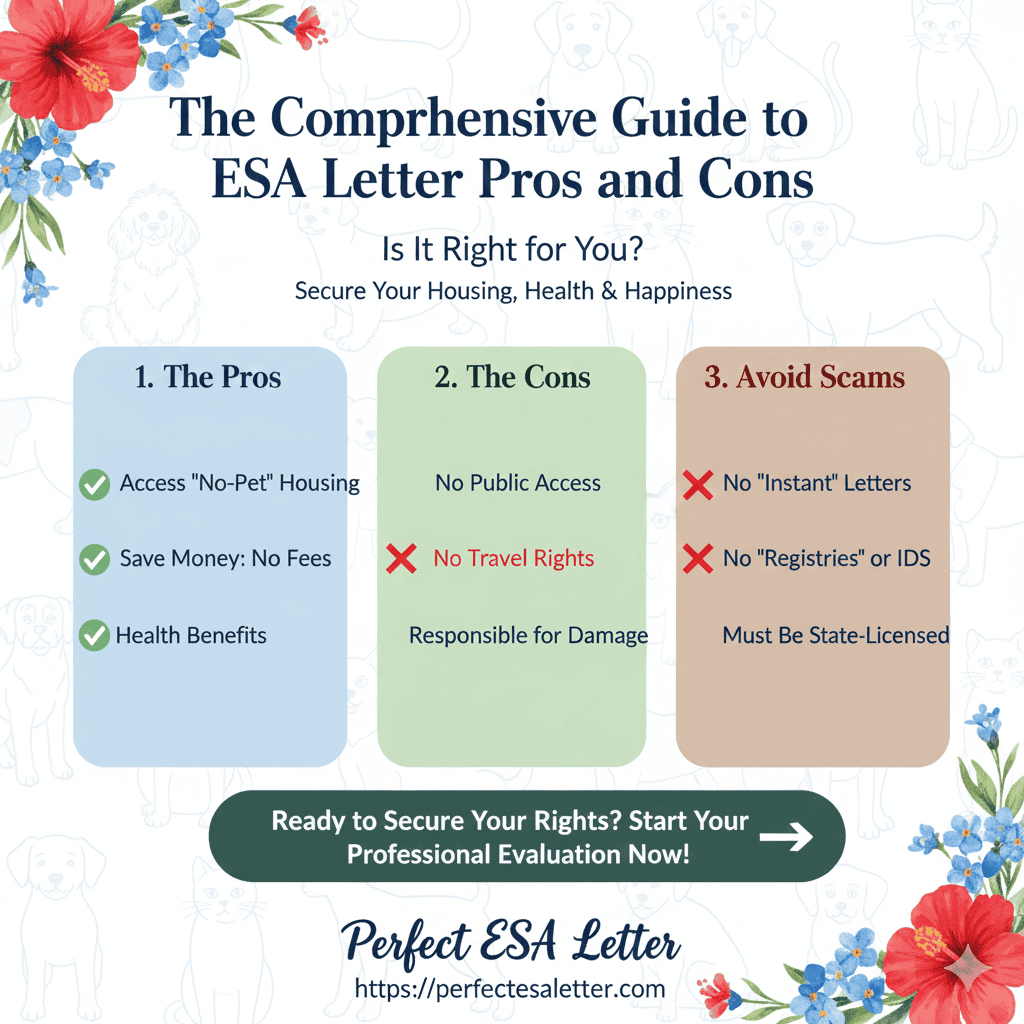
The Comprehensive Guide to ESA Letter Pros and Cons: Is It Right for You?
The Comprehensive Guide to ESA Letter Pros and Cons: Is It Right for You?
For many people, the bond with an animal is a vital part of their mental health journey. Whether it’s a dog that senses a panic attack or a cat that provides comfort during a depressive episode, emotional support animals (ESAs) offer life-changing support. However, as the rental market becomes more restrictive, the need for formal documentation has grown.
If you are considering obtaining one, weighing the ESA letter pros and cons is a crucial first step. While the benefits of housing protection and fee waivers are significant, there are responsibilities and potential pitfalls—such as online scams—that you must navigate.
At Perfect ESA Letter, we believe in empowering tenants with the facts. We connect you with state-licensed mental health professionals to ensure your documentation is 100% legitimate and compliant with federal law. Apply for an ESA letter now to start your professional evaluation.
The Pros of Having a Valid ESA Letter
The primary reason most people seek an ESA letter is to secure their housing rights. Under the Fair Housing Act (FHA), an ESA is not a “pet” but a “reasonable accommodation” for a disability.
1. Access to “No-Pet” Housing
One of the most significant pros is the ability to live in properties that otherwise prohibit animals. Whether it’s a luxury apartment complex or a small rental home, a valid ESA letter overrides “no-pet” policies, ensuring you never have to choose between your home and your companion.
2. Financial Savings: No Pet Rent or Deposits
Pet ownership in rentals can be expensive. A valid ESA letter exempts you from:
-
Monthly Pet Rent: Saving you $25–$100 per month.
-
Pet Deposits: Saving you $200–$500 in upfront costs.
-
Non-Refundable Pet Fees: Often used for “cleaning” or “application” costs.
3. Protection Against Breed and Weight Restrictions
Many buildings ban specific breeds (like Pit Bulls or German Shepherds) or have weight limits (e.g., “dogs under 25 lbs”). Under the FHA, these restrictions generally do not apply to emotional support animals, provided the specific animal does not pose a direct threat.
4. Therapeutic and Mental Health Support
Beyond the legalities, the clinical pro is the support itself. Research shows that ESAs can lower blood pressure, reduce cortisol (the stress hormone), and increase oxytocin. For those with anxiety or PTSD, having their animal recognized as a medical necessity provides a sense of legitimacy and security.
The Cons of Having an ESA Letter
While the advantages are clear, it is important to understand the limitations and responsibilities that come with an ESA designation.
1. No Public Access Rights
Unlike Service Dogs (protected by the ADA), ESAs do not have the right to enter grocery stores, restaurants, or shopping malls. They are only legally protected in housing. Using an ESA letter to try and bring an animal into a non-pet-friendly restaurant is a common mistake and can lead to conflict.
2. No Special Travel Rights
In recent years, the laws regarding air travel have changed. Airlines are no longer required to let ESAs fly for free in the cabin. Most now treat ESAs as standard pets, requiring them to stay in a carrier under the seat and charging a pet fee.
3. Responsibility for Damage
While you don’t pay a pet deposit, you are still 100% financially responsible for any damage your animal causes to the property. If your dog chews the baseboards or your cat ruins the carpet, the landlord can deduct these costs from your standard security deposit at the end of your lease.
4. The Risk of Scams
This is the biggest “con” for the uninformed. The internet is flooded with “instant certification” sites. If you pay for a “certificate” or “registration” instead of a clinical letter from an LMHP, your landlord can legally reject it.
Comparing ESA Letters vs. Psychiatric Service Dogs (PSDs)
When evaluating ESA letter pros and cons, it’s helpful to see how they compare to Psychiatric Service Dogs.
| Feature | Emotional Support Animal (ESA) | Psychiatric Service Dog (PSD) |
| Housing Protection (FHA) | Yes | Yes |
| No Pet Rent/Fees | Yes | Yes |
| Public Access (ADA) | No | Yes |
| Air Travel Rights | No (treated as pet) | Yes (fly in cabin) |
| Training Required | None | Task-Trained |
| Documentation | ESA Letter from LMHP | PSD Letter/Self-Certification |
How to Ensure Your ESA Letter is a “Pro” (And Not a Liability)
To get the full benefits of an ESA letter without the “cons,” you must ensure your documentation is ironclad.
The HUD-Compliant Checklist
A legitimate letter must come from a Licensed Mental Health Professional (LMHP) who is licensed in your state. It should include:
-
The clinician’s license number and type.
-
Confirmation of a disability-related need (without disclosing the specific diagnosis).
-
The professional’s contact information for landlord verification.
Avoid the “Registry” Trap
Never pay for a “National ESA Registry” or an “Official ID Badge.” These carry zero legal weight and are often the first thing a landlord looks for to identify a scam. A legitimate provider will focus on the clinical evaluation, not plastic badges.
Why Choose Perfect ESA Letter?
We understand that navigating the ESA letter pros and cons can be overwhelming. At Perfect ESA Letter, we remove the risks by strictly adhering to HUD and FHA guidelines.
-
State-Licensed Professionals: We match you with clinicians licensed in your specific state to ensure local compliance.
-
Telehealth Convenience: Skip the waiting room with secure, private video or phone consultations.
-
Landlord Support: If your property manager has questions, our team and clinicians are here to provide verification support.
-
Fast, Legitimate Turnaround: While we don’t offer “instant” scams, we typically provide approved letters within 24–48 hours of your consultation.
Internal Linking Suggestions
Frequently Asked Questions (FAQs)
1. Can a landlord deny an ESA if the building has a “no-pets” policy?
No. Under the Fair Housing Act, a landlord must provide a “reasonable accommodation” for an ESA, regardless of their pet policy, as long as the tenant provides a valid ESA letter.
2. Do I have to pay pet rent if I have an ESA letter?
No. One of the biggest pros of an ESA letter is that it exempts you from all pet-related fees, including monthly pet rent and one-time deposits.
3. Is an ESA letter from an online therapist valid?
Yes, as long as the therapist is licensed in your state and conducts a proper evaluation. Telehealth is a fully recognized method for providing medical documentation for ESAs.
4. Can I have more than one ESA?
Yes, but you must be able to demonstrate a disability-related need for each animal. A legitimate service will ensure your provider documents why each animal is necessary for your treatment.
5. What happens if my animal is a “restricted breed”?
The FHA generally overrides breed restrictions. A landlord cannot deny your ESA simply because of its breed unless they can prove that the specific animal is dangerous or an “undue burden.”
6. Does my ESA letter expire?
Most landlords require an ESA letter to be dated within the last 12 months. Periodic renewals ensure that your therapeutic need for the animal is current and compliant with your lease.
Conclusion: Making the Right Choice for Your Health
When you weigh the ESA letter pros and cons, the benefits for those with genuine mental health needs far outweigh the limitations. The ability to live in a safe, affordable home with your support animal is a right worth protecting. The key is to avoid shortcuts and work with a service that prioritizes clinical integrity.
Don’t let “no-pet” policies or expensive fees keep you away from the companionship you need. Get a document that landlords respect and that stands up to the law.
Ready to live fee-free with your support animal?
Secure your housing rights today with a legitimate, state-licensed professional.