
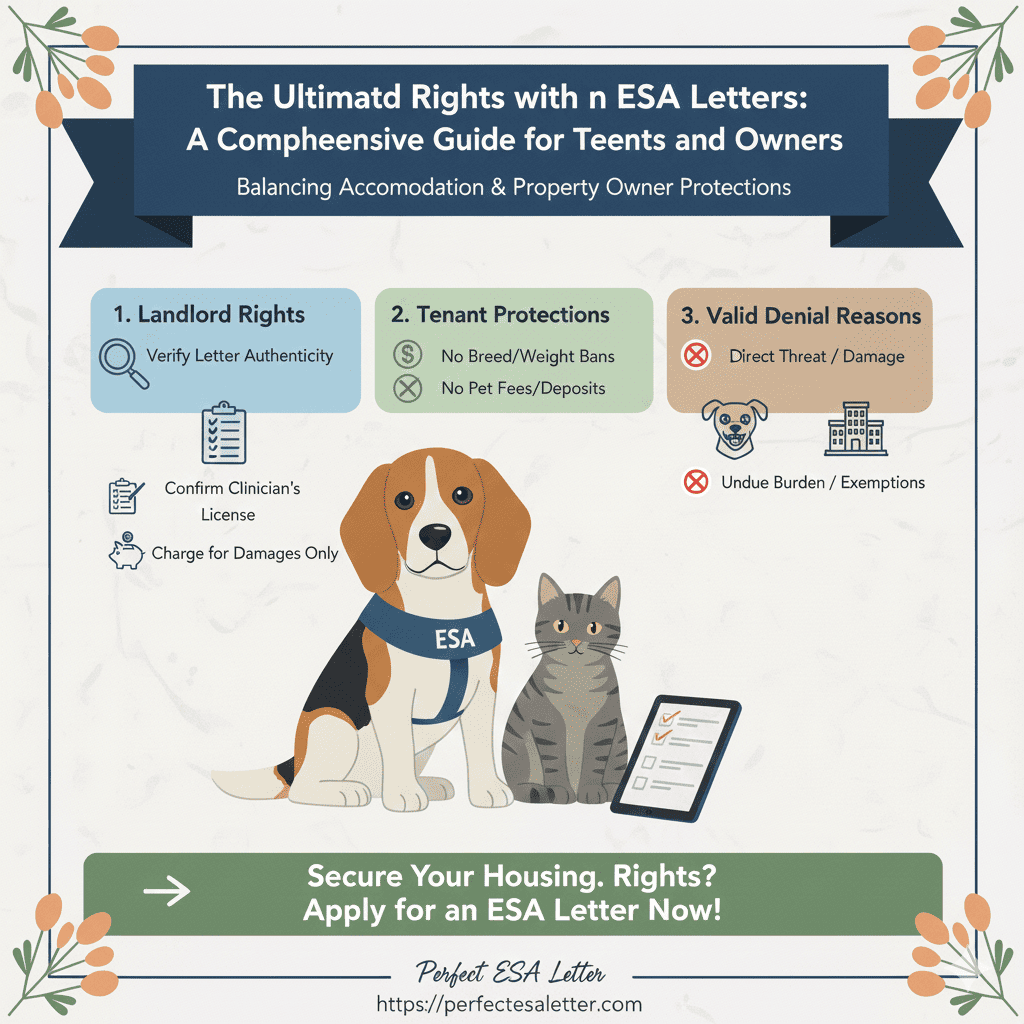
Landlord Rights with ESA Letters: A Comprehensive Guide for Tenants and Owners
Landlord Rights with ESA Letters: A Comprehensive Guide for Tenants and Owners
Navigating the relationship between a housing provider and a tenant with an emotional support animal (ESA) requires a delicate balance of empathy and legal knowledge. While federal law provides robust protections for individuals with mental health disabilities, many people are unaware that property owners also have specific protections. Understanding landlord rights with ESA letters is essential for any tenant who wants to ensure their accommodation request is handled smoothly and legally.
The Fair Housing Act (FHA) mandates that landlords provide “reasonable accommodations” for assistance animals, which includes ESAs. However, this does not mean a landlord must blindly accept every piece of paper handed to them. There are clear boundaries regarding what a landlord can ask, what they can verify, and under what specific circumstances they can say “no.”
At Perfect ESA Letter, we advocate for transparency and legitimacy. We provide HUD-compliant documentation that respects both the tenant’s need for support and the landlord’s right to professional verification.
Apply for an ESA letter now to ensure your documentation meets all federal requirements.
Understanding the Core of Landlord Rights with ESA Letters
When a tenant submits an ESA letter, the landlord’s primary right is the right to reliable documentation. According to the U.S. Department of Housing and Urban Development (HUD), a landlord is not required to accept a “registration” or “certificate” purchased from a website that does not involve a clinical evaluation.
The Right to Verification
One of the most important landlord rights with ESA letters is the ability to verify the authenticity of the document. A landlord or property manager can:
-
Confirm that the person who signed the letter is a licensed healthcare professional.
-
Verify that the professional’s license is active and valid in the state where the healthcare was provided.
-
Ensure the letter contains the professional’s contact information and license number.
The Right to Professional Standards
Landlords have the right to insist that the letter establishes a “clinical nexus.” This means the letter must clearly state that the individual has a disability-related need for the animal. If a letter simply says “this person has a dog,” without explaining that the dog alleviates symptoms of a mental health condition, the landlord has the right to request more specific (though not intrusive) information.
When Can a Landlord Legally Deny an ESA?
A common misconception is that an ESA letter is a “magic wand” that works in every single scenario. In reality, landlord rights with ESA letters include the ability to deny a request under specific, legally defined conditions.
1. Threat to Safety or Property
If a specific animal has a documented history of aggressive behavior, biting, or causing significant physical damage to the property, the landlord can deny the request. The denial must be based on the individual animal’s behavior, not on its breed or size.
2. Undue Financial or Administrative Burden
If accommodating the animal would cause an “undue financial or administrative burden” on the housing provider, they may have grounds for denial. For example, if the landlord’s insurance company threatens to cancel the entire building’s policy because of a specific animal, this could be considered an undue burden.
3. The “Mrs. Murphy” Exemption
The FHA does not apply to all types of housing. Landlords have rights to refuse ESAs if:
-
The building has four or fewer units and the owner lives in one of them.
-
The property is a single-family home sold or rented by the owner without the use of a real estate agent.
Landlord Rights vs. Tenant Protections: A Comparison
| Feature | Landlord Rights | Tenant Protections |
| Fees | Can charge for actual damages caused by the animal. | Cannot be charged pet rent, pet deposits, or move-in pet fees. |
| Inquiry | Can ask for a letter from a licensed professional. | Cannot be asked for specific medical records or a diagnosis. |
| Breed/Weight | Can deny an animal based on specific dangerous behavior. | Cannot be denied based on “restricted breed” lists or weight limits. |
| Verification | Can call the clinician to verify the letter’s authenticity. | Has the right to a “reasonable accommodation” within a timely manner. |
What Landlords CANNOT Do
To maintain a fair living environment, it is equally important to know where landlord rights with ESA letters end. A landlord is overstepping their legal bounds if they:
-
Require the animal to have “specialized training”: ESAs do not require training to be legal.
-
Demand a “certification” or “vest”: These are not recognized by HUD or the FHA.
-
Charge an “application fee” for the ESA: This is considered discrimination.
-
Force the tenant to use a specific form: As long as the clinician’s letter meets HUD standards, the landlord must accept it.
Best Practices for Tenants to Respect Landlord Rights
If you want to ensure your request is approved without friction, follow these professional tips:
-
Be Proactive: Submit your request as early as possible. While you can submit it after moving in, doing it during the application process shows you are acting in good faith.
-
Use Local Clinicians: Landlords are more likely to trust a letter from a professional licensed in your state. This is a key part of ensuring your letter is seen as “reliable documentation.”
-
Ensure Clinical Validity: Don’t use “registration” sites. Use a service like Perfect ESA Letter that provides direct access to licensed human professionals.
-
Provide a Paper Trail: Send your request via email so you have a record of when the landlord received the documentation.
Internal Linking Suggestions
Frequently Asked Questions (FAQs)
1. Can a landlord call my therapist?
Yes. A landlord has the right to verify that the therapist actually wrote the letter and that their license is valid. However, they cannot ask for details about your therapy sessions or your specific medical diagnosis.
2. Do landlord rights with ESA letters allow them to charge for damages?
Yes. While a landlord cannot charge a “pet deposit” upfront, they can bill the tenant for any actual damage the animal causes to the apartment, just as they would for damage caused by a human occupant.
3. Can a landlord refuse an ESA if they have a “No Pets” policy?
No. Under the Fair Housing Act, an ESA is not a pet; it is an assistance animal. A “No Pets” policy does not apply to ESAs, and landlords must make an exception unless an exemption (like the Mrs. Murphy exemption) applies.
4. What if the landlord’s insurance doesn’t allow certain breeds?
HUD has stated that a landlord cannot deny an ESA simply because of an insurance policy’s breed restrictions. The landlord must show that the insurance company would actually cancel the policy or significantly increase costs, and even then, they must try to find a different policy first.
5. Can a landlord require the ESA to be spayed or neutered?
Generally, landlords can enforce local health and safety ordinances. If the city requires all domestic animals to be vaccinated or licensed, the ESA owner must comply. However, specific spay/neuter requirements vary by jurisdiction.
6. Is a letter from an out-of-state doctor valid?
It can be, but it is a “red flag” for many landlords. To best respect landlord rights with ESA letters, it is highly recommended to use a clinician licensed in the state where you reside to avoid any questions about the legitimacy of the therapeutic relationship.
7. How long does a landlord have to respond to an ESA request?
HUD guidelines suggest that a landlord should respond to a “reasonable accommodation” request within 10 days. An unreasonable delay can be viewed as a “constructive denial,” which is a violation of the FHA.
8. Can a landlord ask me to sign an “ESA Addendum”?
Yes, but the addendum cannot include illegal terms, such as charging pet rent. It can, however, outline the tenant’s responsibility for the animal’s behavior and the requirement to keep the animal under control.
Protect Your Rights and Respect the Law
Understanding landlord rights with ESA letters is the best way to ensure a harmonious living situation. By providing high-quality, professional, and verifiable documentation, you remove the landlord’s reasons for skepticism.
At Perfect ESA Letter, we understand the nuances of the Fair Housing Act. We help you navigate the process by connecting you with state-licensed professionals who provide letters that are legally sound and clinically honest. We don’t just help you get a letter; we help you secure a home.
Don’t leave your housing to chance. Ensure your request is backed by legitimate medical professionals and stands up to any landlord’s verification process.