
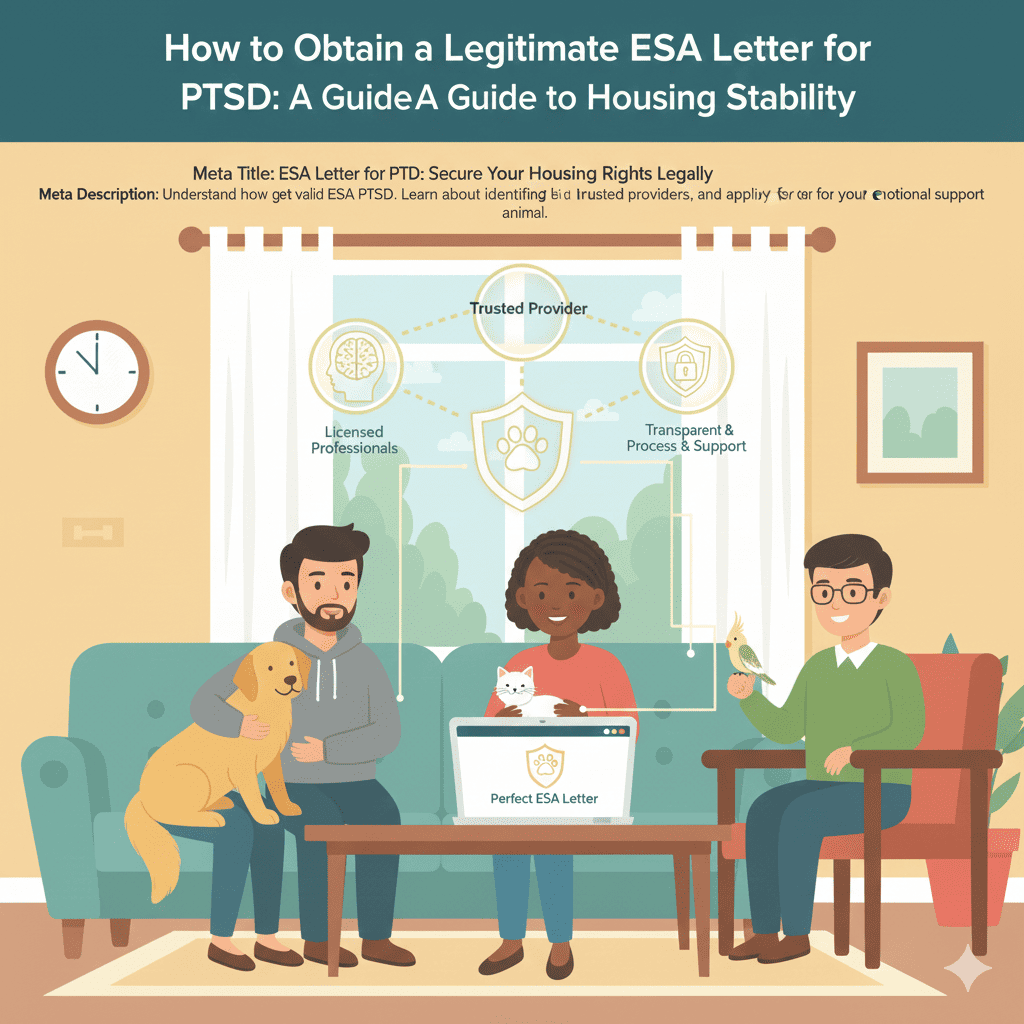
How to Obtain a Legitimate ESA Letter for PTSD: A Guide to Housing Stability
How to Obtain a Legitimate ESA Letter for PTSD: A Guide to Housing Stability
For individuals living with Post-Traumatic Stress Disorder (PTSD), daily life can be a minefield of triggers, anxiety, and emotional dysregulation. While therapy and medication are cornerstone treatments, many find profound comfort and stability in the presence of an emotional support animal (ESA). An ESA can offer a crucial buffer against distressing symptoms, helping to create a sense of safety and calm.
However, to legally reside with your ESA in “no-pet” housing, you need a legitimate ESA letter for PTSD. The process can seem daunting, with many online services making questionable claims. This comprehensive guide will illuminate the path to securing a valid ESA letter, ensuring your housing rights are protected under federal law.
Understanding the Therapeutic Role of an ESA for PTSD
An emotional support animal provides therapeutic benefits through companionship and non-judgmental support, which can be particularly impactful for someone managing PTSD. These animals help mitigate symptoms such as:
-
Anxiety and Panic Attacks: An ESA’s presence can ground an individual during moments of intense fear or panic.
-
Hypervigilance: The animal can offer a sense of security, reducing the constant need to be on guard.
-
Social Isolation: ESAs provide companionship, reducing feelings of loneliness and encouraging interaction.
-
Flashbacks and Nightmares: The animal’s presence can offer comfort and a return to reality after a distressing episode.
An ESA letter for PTSD officially documents this therapeutic need. It is a formal recommendation from a Licensed Mental Health Professional (LMHP) asserting that your animal is essential for your mental health stability.
ESA vs. Service Animal for PTSD: What’s the Difference?
It’s important to distinguish between ESAs and service animals. While both provide support, service animals are individually trained to perform specific tasks directly related to a person’s disability (e.g., waking someone from a nightmare, retrieving medication). ESAs, by contrast, do not require specific training; their presence and companionship are their primary function. This distinction is crucial for understanding your rights under different federal laws.
Identifying a Trusted Provider for Your ESA Letter for PTSD
The internet is rife with sites offering instant ESA certifications, but these are rarely legitimate. To ensure your ESA letter for PTSD stands up to scrutiny, look for providers who adhere to the following standards:
1. Verification by a Licensed Mental Health Professional (LMHP)
The cornerstone of a legitimate ESA letter is an evaluation by a qualified LMHP. This includes licensed psychologists, psychiatrists, therapists, or clinical social workers.
-
Crucial Check: The professional must be licensed in your specific state. A valid letter will always include their license number and the state of issuance.
-
Warning Sign: Avoid any service that promises a letter without a direct, live consultation with a licensed clinician.
2. Adherence to Federal and State Regulations
ESA laws are governed by the Fair Housing Act (FHA) at the federal level, and some states have additional specific requirements (e.g., establishing a therapeutic relationship for a certain period before issuing a letter). A reputable provider will be fully aware of and compliant with these laws.
3. Transparent and Supportive Process
A trustworthy provider will offer a clear, step-by-step process, including:
-
An initial assessment to determine potential eligibility.
-
A scheduled consultation with an LMHP.
-
Ongoing support if your landlord has questions or challenges the validity of your letter.
4. Commitment to Privacy and Data Security
Your medical information is personal. Ensure the platform you use is HIPAA-compliant, protecting your sensitive health data throughout the process.
Your Housing Rights with an ESA Letter for PTSD
The Fair Housing Act (FHA) prohibits housing providers from discriminating against individuals with disabilities, including those who require emotional support animals. With a legitimate ESA letter for PTSD, you are entitled to several key protections:
| Housing Protection | Description of Benefit |
| No Pet Fees/Deposits | Landlords cannot charge extra fees, pet rent, or security deposits for an ESA. |
| Exemption from Pet Policies | You can reside with your ESA in “no-pet” housing. |
| No Breed/Weight Restrictions | ESAs are exempt from breed, size, and weight limitations typically applied to pets. |
| Reasonable Accommodation | The landlord must make reasonable adjustments to their policies to accommodate your ESA. |
What to Expect When Presenting Your Letter
Once you receive your ESA letter, you’ll present it to your housing provider. They are allowed to:
-
Verify the authenticity of the LMHP’s license.
-
Confirm that the professional has, in fact, prescribed an ESA for you.
-
Request confirmation that you have a disability and need an ESA to alleviate symptoms of that disability.
They cannot request specific details about your diagnosis, ask you to demonstrate your animal’s “training,” or demand medical records.
The Process of Getting an ESA Letter for PTSD
Securing your ESA letter for PTSD through a trusted service like Perfect ESA Letter typically involves these steps:
Step 1: Initial Online Assessment
You’ll complete a confidential questionnaire about your mental health history and how your PTSD symptoms are impacted by your animal. This helps prepare for your clinical evaluation.
Step 2: Live Consultation with an LMHP
You will have a scheduled consultation with a licensed mental health professional. This is your opportunity to discuss your PTSD, how it affects your daily life, and how your emotional support animal contributes to your well-being.
Step 3: Receive Your Official ESA Letter
If the LMHP determines that you meet the criteria for an ESA, they will issue a legally compliant letter on their official letterhead. This document is crucial for your housing rights.
Avoiding Scams: Red Flags to Watch For
When seeking an ESA letter for PTSD, be wary of:
-
“Instant Approval” without a Consultation: Legitimate mental health evaluations take time.
-
“Official ESA Registries” or “Certifications”: These are not recognized by HUD or the FHA and provide no legal protection.
-
Extremely Low Prices: Quality clinical evaluation and professional services have a fair cost.
-
Promises of “Lifetime” Letters: While the FHA doesn’t specify an expiration, many housing providers prefer a letter that is relatively current to reflect your present needs.
Internal Linking Suggestions
-
Anchor Text: “understanding mental health disabilities” (Link to an informational page about qualifying conditions)
-
Anchor Text: “Fair Housing Act protections” (Link to a detailed guide on FHA regulations)
-
Anchor Text: “the benefits of emotional support animals” (Link to a blog post discussing therapeutic advantages)
Frequently Asked Questions (FAQs)
1. Can a landlord refuse my ESA for PTSD?
A landlord can only refuse an ESA if the animal poses a direct threat to the safety of others or would cause significant damage to the property, or if accommodating the animal would create an “undue financial and administrative burden” (a high legal bar). They cannot refuse simply because they have a “no-pets” policy.
2. Does my ESA need special training for PTSD?
No. Unlike service dogs, ESAs do not require any specific training to perform tasks. Their role is to provide comfort and support through their presence, as prescribed by an LMHP.
3. What if my PTSD symptoms fluctuate? Is my ESA letter still valid?
Your ESA letter is based on your qualifying disability. Fluctuations in symptoms are common with PTSD, and your animal’s consistent support remains valuable. The letter validates your general need, not your daily symptom severity.
4. Can my landlord ask me for my medical records related to my PTSD?
No. Your landlord is prohibited from asking for specific medical records, diagnoses, or detailed information about your mental health condition. They can only request documentation to verify your disability and the need for an ESA.
5. How often do I need to renew my ESA letter?
While federal law does not state an expiration, many landlords prefer a letter that is relatively current (e.g., issued within the last 12 months) to ensure it reflects your ongoing need for an ESA. It’s wise to discuss renewal with your LMHP.
6. Can I get an ESA letter for PTSD if my animal is a cat, bird, or other non-dog?
Yes. The FHA covers all common domesticated animals that provide emotional support. The type of animal is less important than the documented need for its presence.
7. Will an ESA letter for PTSD help with airline travel?
Current Department of Transportation (DOT) regulations no longer mandate airlines to recognize ESAs for free travel in the cabin. Your ESA will likely be treated as a regular pet during flights. However, your housing rights remain fully protected under the FHA.
Find Stability and Support in Your Home Environment
Living with PTSD is a profound challenge, and the comfort of an emotional support animal can be a lifeline. Don’t let uncertainty about housing regulations add to your stress. Obtaining a legitimate ESA letter for PTSD is a crucial step toward securing your peace of mind and your right to live with your therapeutic companion.
At Perfect ESA Letter, we connect you with licensed mental health professionals who understand the complexities of PTSD and the healing power of animals. Our secure, compliant, and supportive process ensures you receive valid documentation, empowering you to live in your home without fear of discrimination.