
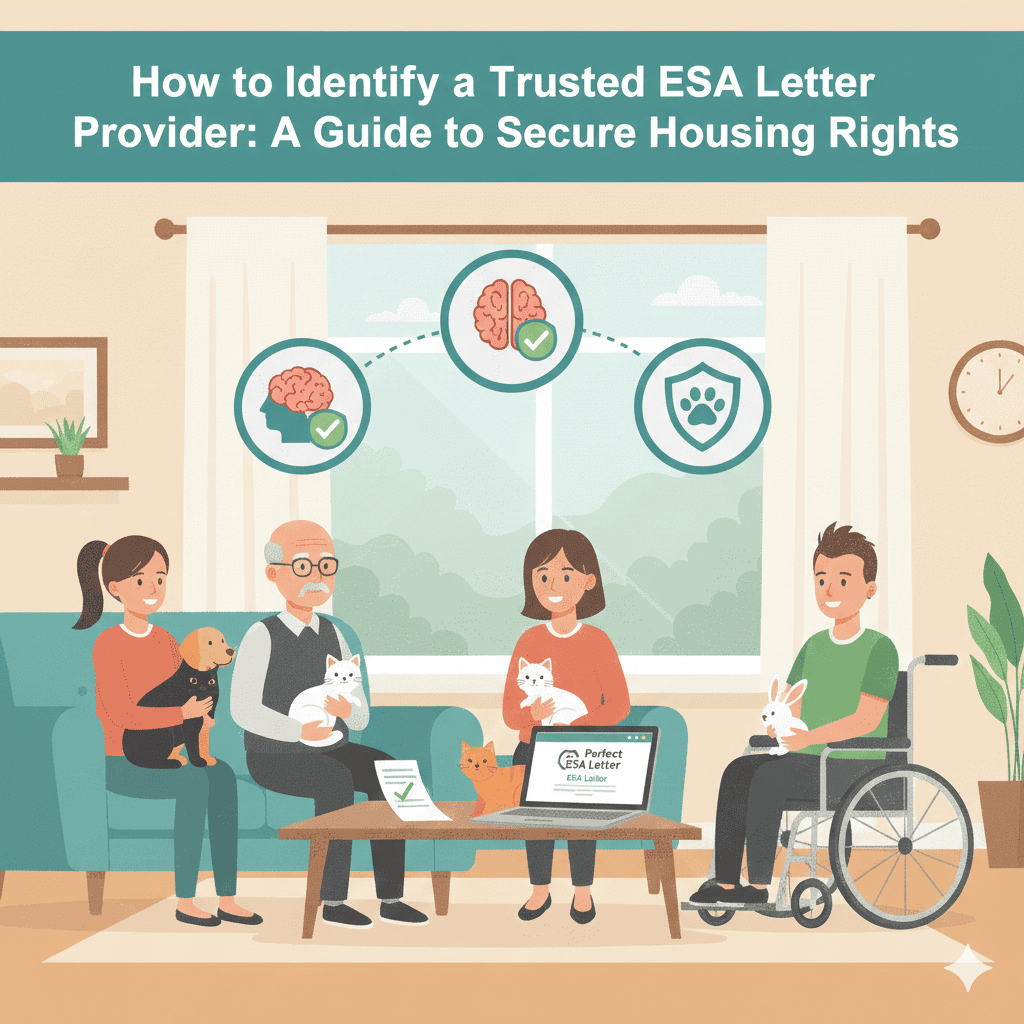
How to Identify a Trusted Provider for an ESA Letter for Anxiety: A Guide to Secure Housing Rights
How to Identify a Trusted Provider for an ESA Letter for Anxiety: A Guide to Secure Housing Rights
Living with anxiety can make everyday tasks feel like an uphill battle. For many, the companionship of an emotional support animal (ESA) isn’t just a luxury—it is a vital part of a mental health treatment plan. However, navigating the legalities of housing with an animal can be stressful, especially when trying to secure a legitimate ESA letter for anxiety.
The Fair Housing Act (FHA) protects your right to live with your support animal, even in “no-pet” housing. But to exercise these rights, you need a document that meets federal and state requirements. This guide will walk you through identifying trusted providers, understanding your rights, and ensuring your documentation is legally ironclad.
Understanding the Role of an ESA Letter for Anxiety
An emotional support animal provides comfort, calm, and stability to individuals struggling with various mental health conditions. Unlike service animals, which are trained for specific tasks, ESAs assist through their presence alone.
If you are seeking an ESA letter for anxiety, it’s important to know that this document is essentially a prescription from a licensed mental health professional (LMHP). It verifies that you have a qualifying disability and that the animal provides necessary therapeutic relief.
Why Your Choice of Provider Matters
The internet is flooded with “instant” certificates and “registration” sites. Unfortunately, many of these are scams. HUD (the Department of Housing and Urban Development) explicitly states that “registration” or “certificates” purchased online are generally not sufficient to establish a need for an ESA. You need a letter from a licensed professional who has evaluated your mental health.
Key Criteria for Identifying a Trusted ESA Provider
To ensure your housing rights are protected and your landlord accepts your documentation, look for these four pillars of a trusted provider:
1. Evaluation by Licensed Professionals
A legitimate provider will always connect you with a Licensed Mental Health Professional (LMHP). This could be a therapist, psychologist, psychiatrist, or clinical social worker licensed in your state.
-
Check for: Credentials and state-specific licensing.
-
Avoid: Sites that offer “automated” letters without a professional review.
2. Compliance with Federal and State Laws
Laws regarding ESAs can vary by state (for example, California has specific “notice” requirements). A trusted provider stays updated on HUD guidelines and regional legislative changes to ensure your letter is compliant.
3. Transparent Process and Support
A reliable service won’t just send a PDF and disappear. They should offer:
-
Pre-screening to see if you qualify.
-
Direct communication with the clinician.
-
Support if a landlord or HOAs raises questions about the letter’s validity.
4. Privacy and Data Security
Medical information is sensitive. Ensure the provider uses HIPAA-compliant platforms to protect your personal data and mental health history.
The Legal Benefits of a Valid ESA Letter
When you have a legitimate ESA letter for anxiety from a provider like Perfect ESA Letter, you are granted specific protections under the Fair Housing Act:
| Protection | Benefit Description |
| No Pet Deposits | Landlords cannot charge additional “pet rent” or security deposits for an ESA. |
| Bypass Breed Restrictions | ESAs are exempt from weight or breed limitations in most housing complexes. |
| No-Pet Policy Exemptions | You can live in “no-pet” housing as long as your ESA does not pose a direct threat. |
| Privacy Rights | Landlords cannot ask for your specific medical records or a detailed history of your anxiety. |
How to Get an ESA Letter for Anxiety: Step-by-Step
The process of obtaining a valid letter should be clinical, not just a checkout experience.
Step 1: Online Pre-Assessment
Most reputable services start with a questionnaire. This helps determine if your anxiety symptoms meet the criteria for an emotional support animal under the Americans with Disabilities Act (ADA) and FHA guidelines.
Step 2: Consultation with a Licensed Professional
You will speak with an LMHP. During this consultation, you’ll discuss how your anxiety affects your daily life and how an animal helps mitigate those symptoms.
Step 3: Receiving Your Document
If the professional determines that an ESA is a necessary part of your treatment, they will issue a signed letter on their official letterhead. This letter will include their license type, number, and the date of issuance.
Common Red Flags to Avoid
When searching for an ESA letter for anxiety, stay away from providers that display these warning signs:
-
Instant Approval: If they promise a letter in 5 minutes without talking to a human, it’s likely a scam.
-
“Lifetime” Letters: Most landlords require a letter to be relatively recent (usually within the last year).
-
Registration Kits: HUD does not recognize “Official ESA Registries.” A vest or a tag is not a legal substitute for a signed letter.
-
Incredibly Low Prices: Quality healthcare and professional licensing have costs. If a letter is $20, it likely isn’t being reviewed by a real doctor.
Addressing the Stigma: Anxiety and Support Animals
Anxiety is often an “invisible” disability, which can lead to pushback from skeptical landlords. A professional ESA letter bridges the gap between your private health struggles and your public housing rights. It provides a formal, legal explanation that validates your need for support without forcing you to disclose traumatic details.
Therapeutic Benefits of ESAs for Anxiety:
-
Reduced Cortisol: Interaction with animals is proven to lower stress hormones.
-
Routine and Purpose: Caring for an animal provides a structure that can help manage depressive or anxious episodes.
-
Social Support: Animals offer non-judgmental companionship, reducing the isolation often felt with social anxiety.
Internal Linking Suggestions
-
Anchor Text: “qualifying conditions for an ESA” (Link to your ‘Conditions’ page)
-
Anchor Text: “ESA vs. Service Dog differences” (Link to a comparison blog post)
-
Anchor Text: “Fair Housing Act guidelines” (Link to an article explaining HUD rules)
Frequently Asked Questions (FAQs)
1. Can a landlord deny my ESA letter for anxiety?
A landlord can only deny a valid ESA letter if the animal poses a documented threat to the safety of others, causes substantial physical damage to the property, or if the request creates an “undue financial burden” on the landlord. They cannot deny you simply because they have a “no-pets” policy.
2. Does my ESA need to be specially trained?
No. Unlike service dogs, emotional support animals do not require specialized task training. Their primary function is to provide emotional support through their presence.
3. Do I need to register my dog on a national database?
No. There is no legally recognized national registry for ESAs. The only document that provides you with legal housing protection is a signed letter from a Licensed Mental Health Professional.
4. Can I have more than one ESA for anxiety?
Yes, you can have multiple ESAs if a licensed professional determines that each animal provides a specific benefit for your condition. However, you must be able to demonstrate that the housing can reasonably accommodate multiple animals.
5. Will my ESA letter work for air travel?
As of recent DOT rule changes, airlines are no longer required to recognize ESAs for free travel. Most ESAs are now treated as pets during flights. However, your housing rights under the FHA remain fully intact.
6. How long is an ESA letter valid?
While the FHA doesn’t explicitly state an expiration date, most landlords and property managers prefer a letter that is relatively current to ensure the mental health recommendation is still applicable to your status.
7. Can my landlord ask to see my medical records?
No. Under the FHA, a landlord may ask for documentation of the disability-related need for the animal, but they are not entitled to see your private medical records or know your specific diagnosis.
Secure Your Peace of Mind Today
Don’t let the fear of housing “no-pet” policies prevent you from getting the support you need. A legitimate ESA letter for anxiety is the key to maintaining a stable, supportive home environment with your animal companion.
At Perfect ESA Letter, we specialize in connecting individuals with qualified professionals who understand the therapeutic value of animals. Our process is secure, compliant, and designed to provide you with the documentation you need to live comfortably and legally.