
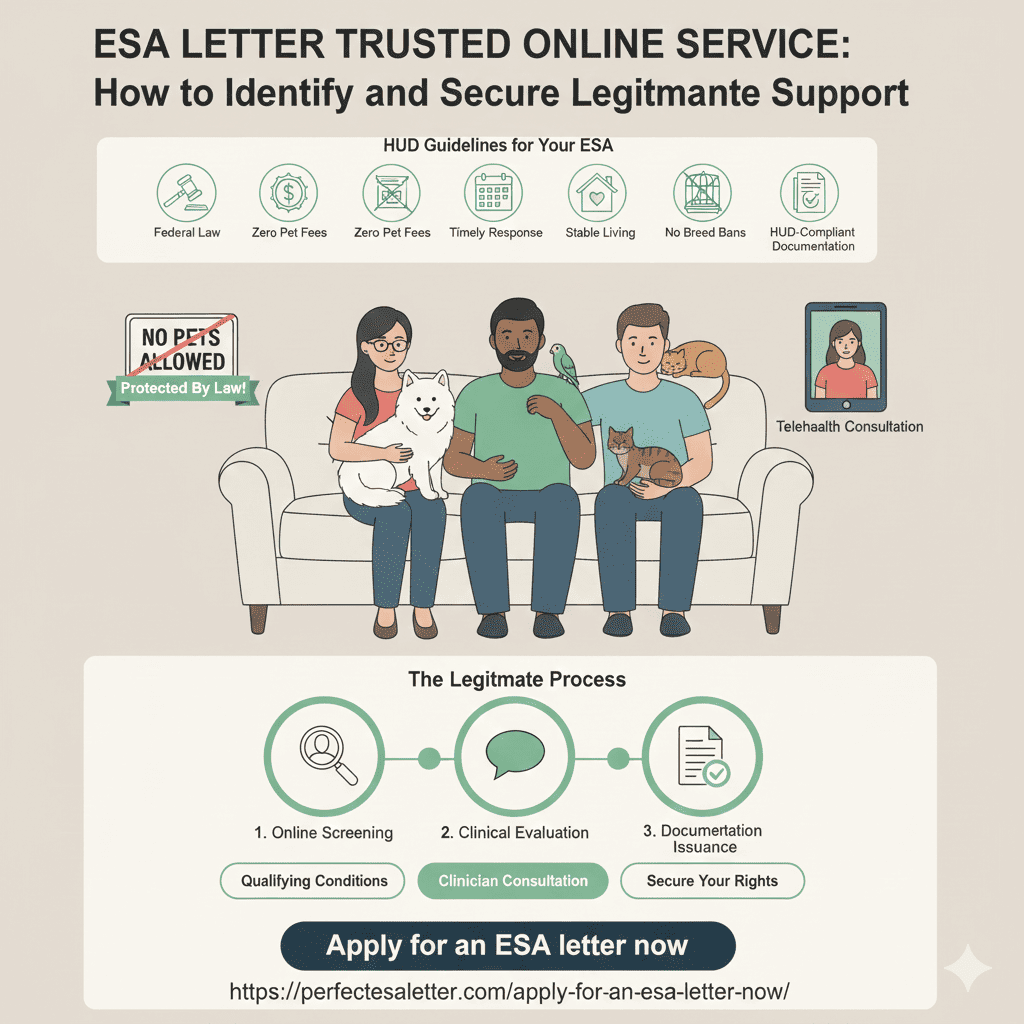
ESA Letter Trusted Online Service: How to Identify and Secure Legitimate Support
ESA Letter Trusted Online Service: How to Identify and Secure Legitimate Support
For millions of people, an emotional support animal (ESA) is more than just a companion; they are a vital source of comfort, stability, and therapeutic relief. Whether you are managing anxiety, depression, or PTSD, your animal helps you navigate the complexities of daily life. However, to ensure that you and your animal are protected in your home, you need the correct documentation.
With the rise of digital health, many people turn to the internet to find assistance. But how do you distinguish a scam from an ESA letter trusted online service? In an industry filled with “instant certifications” and fraudulent registries, knowing what to look for is the difference between securing your housing rights and facing a potential eviction. This guide will walk you through the essential markers of a trustworthy service and how to ensure your documentation is 100% compliant with federal law.
What Defines an ESA Letter Trusted Online Service?
A truly trusted service isn’t just a website that sends you a PDF. It is a professional gateway that connects you with state-licensed medical experts. According to the Department of Housing and Urban Development (HUD) and the Fair Housing Act (FHA), a valid ESA letter must meet specific criteria that no “registration” site can provide.
The Core Pillars of a Legitimate Service:
-
Licensed Mental Health Professionals (LMHPs): Every letter must be signed by a clinician (psychiatrist, psychologist, or LCSW) who is actively licensed in your state of residence.
-
Direct Clinical Evaluation: You must participate in a live consultation (via phone or video) with the professional. HUD specifically warns against sites that offer letters based solely on a “quiz” without human interaction.
-
State-Specific Compliance: Different states have varying regulations regarding telehealth. A trusted service ensures their clinicians follow local guidelines to a tee.
-
HIPAA-Compliant Data Privacy: Your personal health information is sensitive. A reputable service uses secure, encrypted platforms to protect your privacy.
At Perfect ESA Letter, we focus on these pillars to ensure that every client receives a document that is both clinically sound and legally ironclad.
Why “Registration” and “Certificates” Are Red Flags
One of the easiest ways to spot a scam is if the service tries to sell you a “registration” or an “official certificate.”
The truth is: There is no such thing as an official ESA registry.
Many fraudulent sites charge you for ID cards, vests, and “lifetime registration” numbers. While these might look official to the untrained eye, landlords and property managers are increasingly educated on HUD rules. If you present a “certificate” instead of a clinical letter, your request for reasonable accommodation will likely be denied. An ESA letter trusted online service will always prioritize the doctor-patient relationship over flashy accessories.
Your Rights Under the Fair Housing Act (FHA)
When you obtain your letter through a verified service, you gain significant legal protections. These laws are designed to ensure that individuals with disabilities have an equal opportunity to use and enjoy their dwelling.
What Your Valid Letter Covers:
-
“No-Pet” Housing Exemption: You can live in apartments, condos, and houses that otherwise ban animals.
-
Waiver of Pet Deposits: You are not required to pay the standard $200–$500 pet deposit.
-
Exemption from Pet Rent: Monthly surcharges for animals are waived for valid ESAs.
-
No Breed or Weight Restrictions: Your landlord cannot deny your animal based on its breed or size, provided the animal is well-behaved and doesn’t pose a safety risk.
Comparison: Trusted Service vs. Scam Site
| Feature | Trusted Online Service | Fraudulent “Registry” |
| Clinician Consultation | Yes (Required) | No (Quiz only) |
| Licensed in Your State | Yes | Usually No |
| Legal Documentation | Clinical Letter | Plastic ID / Certificate |
| HUD/FHA Compliant | Yes | No |
How to Spot a Scam Before You Pay
Protecting your wallet is as important as protecting your rights. Watch for these warning signs of an illegitimate provider:
-
“Instant” Approval: If the site promises a letter in 10 minutes, they aren’t using a real doctor.
-
Unrealistically Low Prices: Clinical time with a licensed professional has a standard cost; “bargain” letters are often fake.
-
No Contact Information: If you can’t find a phone number or a physical office address for the company, move on.
-
Claims of Public Access: If a site tells you an ESA letter lets you take your dog into restaurants or grocery stores, they are lying. Only service dogs have public access rights.
Internal Linking Suggestions
-
Anchor Text: how to qualify for an emotional support animal
-
Anchor Text: Fair Housing Act requirements for landlords
-
Anchor Text: ESA letter for anxiety and depression
Frequently Asked Questions (FAQs)
1. Is an online ESA letter really legal for housing?
Yes. HUD guidelines state that a licensed professional can provide an ESA evaluation via telehealth. As long as the clinician is licensed in your state and has evaluated you, the letter is legally binding for housing.
2. Can my landlord call my clinician to verify the letter?
Yes. Landlords are permitted to verify that the professional who signed the letter is indeed licensed and that they wrote the document for you. They cannot, however, ask for your specific medical history or diagnosis.
3. What should be included in a legit ESA letter?
The letter must be on professional letterhead and include the clinician’s license number, license type, state of licensure, and contact information. It must also state that you have a mental health condition and that the animal provides therapeutic support.
4. Does an ESA letter work for any animal?
Most ESAs are dogs or cats, but birds, rabbits, and other “common household pets” can qualify. For “unique” animals, a clinician must provide a more detailed explanation of the therapeutic need.
5. How long does it take to get a letter from a trusted service?
While some sites promise “instant” letters, a ESA letter trusted online service typically takes 24 to 48 hours. This allows time for the professional to review your history and conduct a proper evaluation.
6. Do I need to renew my ESA letter?
While the FHA does not explicitly state that letters expire, most housing providers request a letter that is no more than one year old. Regular renewals ensure your documentation remains current and undisputable.
7. What if my landlord has a “no-pet” policy?
The Fair Housing Act overrides “no-pet” policies. A landlord must grant a “reasonable accommodation” for a documented ESA unless they can prove the animal causes significant damage or poses a threat.
8. Can I use an ESA letter for travel?
As of recent law changes, the Air Carrier Access Act no longer requires airlines to accept ESAs for free in the cabin. However, some individual airlines may still have their own policies. Most ESA letters are primarily for housing protections.
Secure Your Future with a Verified Provider
Choosing an ESA letter trusted online service is an investment in your mental health and your housing security. Don’t risk your home on a $20 certificate that won’t hold up in court. By working with licensed professionals, you ensure that your rights are respected and your animal companion can remain by your side.
At Perfect ESA Letter, we pride ourselves on our transparency and our commitment to legal compliance. Our network of state-licensed clinicians is here to provide you with the professional support you need to navigate the housing market with confidence.