
ESA Letter Eligibility: Understanding the Requirements for Housing Protection
ESA Letter Eligibility: Understanding the Requirements for Housing Protection
For many individuals living with mental or emotional challenges, a companion animal is much more than a pet—they are a vital part of a therapeutic recovery plan. If you are a renter, you likely know the stress of navigating “no-pet” policies or expensive pet deposits. Fortunately, federal law protects those who have a legitimate medical need for their animals. However, the first hurdle to securing these rights is determining your ESA letter eligibility.
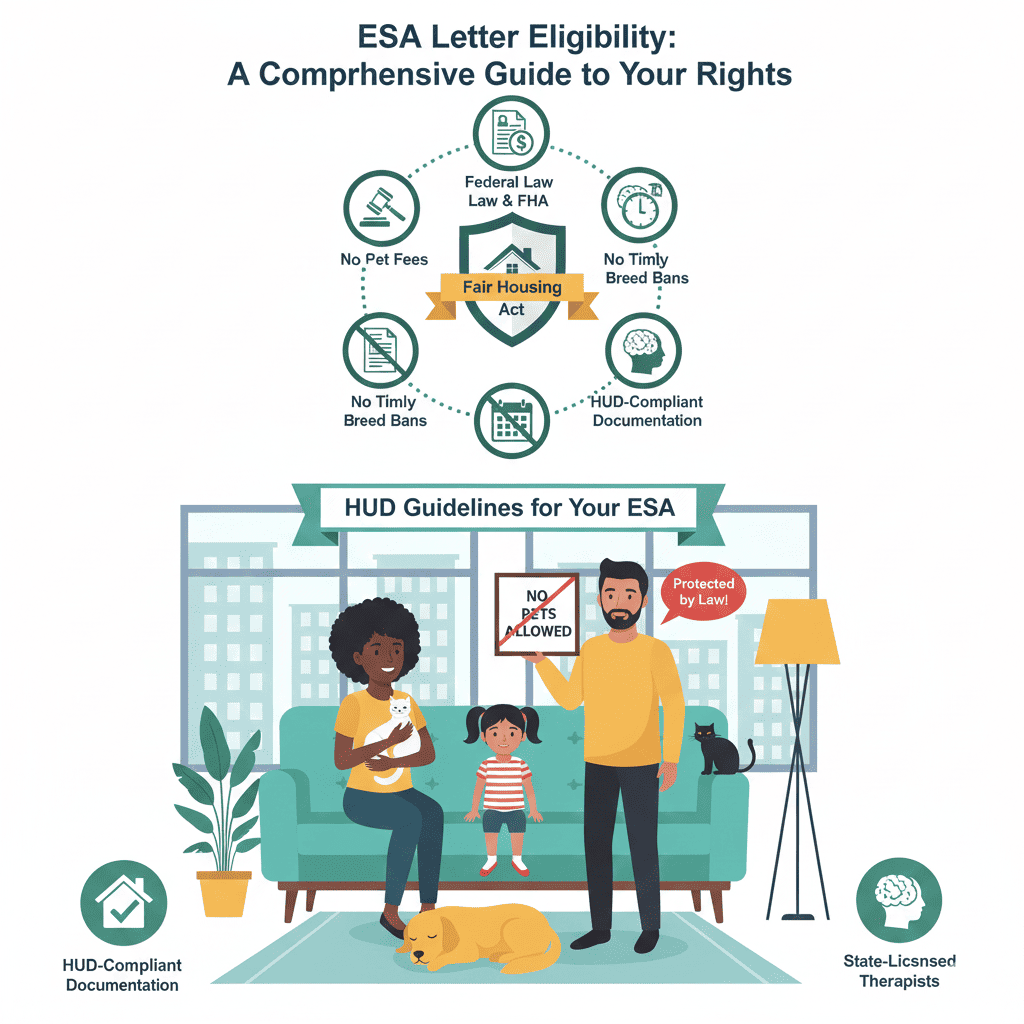
The Fair Housing Act (FHA) provides specific protections for individuals with disabilities, ensuring they can live with their emotional support animals without financial or restrictive penalties. To trigger these protections, you must possess a valid recommendation from a licensed professional. In this comprehensive guide, we will break down exactly what determines ESA letter eligibility, which conditions qualify, and how to ensure your documentation is legally bulletproof.
What Defines ESA Letter Eligibility?
At its core, ESA letter eligibility is based on two primary factors defined by the U.S. Department of Housing and Urban Development (HUD). To be eligible, a person must:
-
Have a Documented Disability: You must have a physical or mental impairment that substantially limits one or more major life activities (such as sleeping, concentrating, or interacting with others).
-
Have a Disability-Related Need for the Animal: There must be a clear “nexus” or connection between the disability and the assistance the animal provides. The animal must provide emotional support that alleviates at least one identified symptom or effect of the existing disability.
It is important to note that you do not need to be “permanently” disabled to qualify. Many individuals qualify due to temporary or manageable conditions that significantly impact their quality of life.
Qualifying Mental Health Conditions
Many people are surprised to learn how broad the spectrum of qualifying conditions is. If you suffer from any of the following, you likely meet the clinical standards for ESA letter eligibility:
Emotional and Mental Health Disorders
-
Anxiety Disorders: Including Generalized Anxiety Disorder (GAD), Social Anxiety, and Panic Disorder.
-
Depression: Chronic depression or Major Depressive Disorder (MDD).
-
Post-Traumatic Stress Disorder (PTSD): Often seen in veterans or survivors of trauma.
-
Bipolar Disorder: Helping to stabilize mood swings through routine and companionship.
-
Attention Deficit Hyperactivity Disorder (ADHD): Aiding in focus and emotional regulation.
-
Obsessive-Compulsive Disorder (OCD): Providing a calming distraction from intrusive thoughts.
-
Phobias: Specifically those that limit your ability to leave the house or feel safe at home.
Stress and Sleep-Related Conditions
Chronic stress that leads to physical or mental exhaustion, as well as insomnia triggered by mental health struggles, are also common reasons why a licensed professional might recommend an emotional support animal.
The Role of the Licensed Mental Health Professional (LMHP)
The only way to legally establish ESA letter eligibility is through an evaluation by a Licensed Mental Health Professional. This professional must be licensed to practice in your state.
Who Can Verify Your Eligibility?
-
Psychiatrists
-
Psychologists
-
Licensed Clinical Social Workers (LCSW)
-
Licensed Marriage and Family Therapists (LMFT)
-
Licensed Professional Counselors (LPC)
-
Mental Health Nurse Practitioners
Important Note: A landlord or property manager is not qualified to determine your eligibility. Only a medical or mental health professional can make this assessment based on their clinical expertise.
Comparison: Assistance Animals vs. Standard Pets
Understanding the difference helps clarify why eligibility is so strictly regulated.
| Feature | Standard Pet | Emotional Support Animal (ESA) |
| Legal Status | Property | Assistance Animal |
| Requires Training | No | No |
| Protected by FHA | No | Yes |
| Exempt from Pet Rent | No | Yes |
| Must have ESA Letter | No | Yes |
Steps to Determine Your ESA Letter Eligibility
If you believe you meet the criteria, the process of securing your legal documentation involves a few key steps designed to satisfy HUD requirements.
1. The Clinical Assessment
You must participate in a consultation where you describe your symptoms and how they interfere with your daily life. This can be done in person or through a secure telehealth platform.
2. Establishing the “Nexus”
The clinician will evaluate how an animal specifically helps you. For example, if you suffer from depression, the clinician may note that the animal provides the necessary motivation for you to maintain a routine and engage with your environment.
3. Verification of Licensure
A legitimate process always ensures the professional is active and licensed in your specific state. This is a crucial step because landlords often check these credentials to verify ESA letter eligibility.
How to Avoid “ESA Letter” Scams
The internet is full of “instant” certificates and “registries” that claim to make your pet an ESA. These are almost always fraudulent. Landlords are increasingly trained to spot these red flags.
-
Avoid “Registries”: There is no federal registry for ESAs. A badge or “ID card” has no legal value.
-
Avoid “Instant” Approval: A legitimate clinician must actually review your case. If you aren’t asked about your mental health history, the letter isn’t valid.
-
Check for a License Number: A valid letter must include the provider’s license type, number, and state of issuance.
At Perfect ESA Letter, we bridge the gap between patients and licensed professionals, ensuring that every letter is issued after a genuine clinical review.
Internal Linking Suggestions
-
Anchor Text: how to talk to your landlord about an ESA
-
Anchor Text: Fair Housing Act guidelines for renters
-
Anchor Text: benefits of an emotional support animal
Overcoming Common Objections to Eligibility
Even after a professional confirms your ESA letter eligibility, you might face questions from a property manager. Here is how to respond:
- “You don’t look disabled.”
The FHA covers invisible disabilities. You are not required to provide medical records or a specific diagnosis to your landlord; your valid ESA letter is sufficient proof.
- “We don’t allow large breeds.”
Under the FHA, breed and size restrictions do not apply to assistance animals. As long as you have the letter, the animal must be accommodated.
- “I need to call your doctor.”
Landlords can contact the professional only to verify the letter’s authenticity. They cannot ask about your medical history or treatment.
Frequently Asked Questions (FAQs)
1. Does a landlord have to accept my ESA letter?
If the letter is from a licensed professional and you meet the ESA letter eligibility requirements, yes. The Fair Housing Act requires landlords to make a “reasonable accommodation” for your animal.
2. Can I qualify for an ESA letter for more than one animal?
Yes. If you have a disability-related need for multiple animals (for example, one for anxiety and another for night terrors), a clinician can write a letter covering both, provided the need for each is justified.
3. Is an ESA letter for renters different from a standard one?
The clinical requirements are the same. However, the letter must be tailored to meet HUD standards for housing to ensure that pet fees and “no-pet” rules are waived.
4. What if my mental health professional is in another state?
Most states require the professional to be licensed in the state where the patient resides. Using a service like Perfect ESA Letter ensures you are matched with a clinician licensed in your specific location.
5. Can I get an ESA letter if I already have a dog?
Absolutely. Many people realize they meet the ESA letter eligibility criteria after having a pet that has naturally become their primary source of emotional support.
6. Do I need to tell my landlord I have an ESA before signing the lease?
You are not legally required to disclose your ESA during the application process. You can request a reasonable accommodation after the lease is signed to avoid potential discrimination.
7. Does the letter ever expire?
While the FHA doesn’t state an expiration date, landlords often request an updated letter every year to ensure the clinical need remains current.
8. What happens if my eligibility is denied?
If a landlord refuses to acknowledge a valid letter from an LMHP, you have the right to file a complaint with the Department of Housing and Urban Development (HUD).
Take the Next Step Toward a More Supportive Home
Understanding your ESA letter eligibility is the first step toward a living situation that supports your mental health rather than adding to your stress. You have the legal right to live with the animal that helps you heal, and you shouldn’t have to pay extra for that privilege.
At Perfect ESA Letter, we specialize in connecting individuals with state-licensed professionals who can provide legitimate, HUD-compliant documentation. Our process is designed to be compassionate, private, and legally sound, helping you protect your housing rights with confidence.