
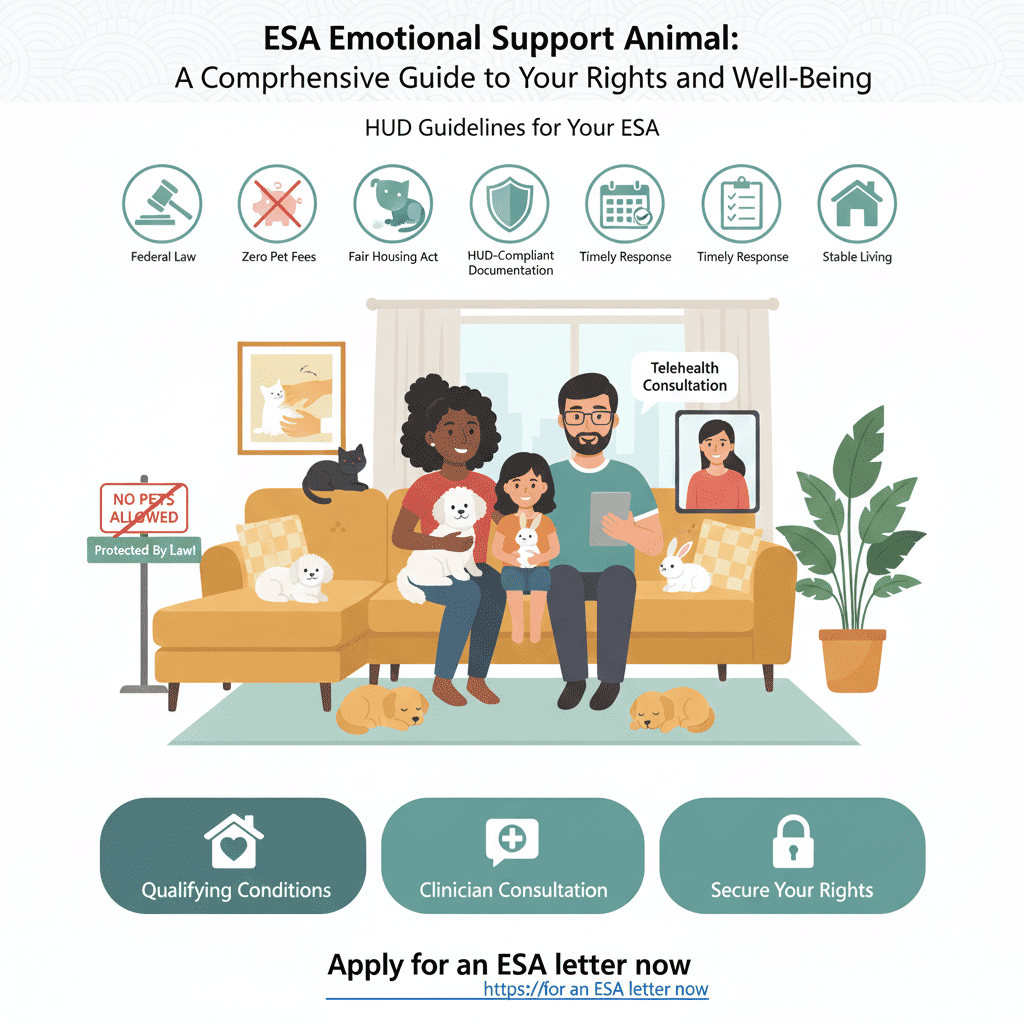
ESA Emotional Support Animal: A Comprehensive Guide to Your Rights and Well-Being
ESA Emotional Support Animal: A Comprehensive Guide to Your Rights and Well-Being
Living with a mental health condition can feel like an uphill battle, but you don’t have to face it alone. For millions of people, an ESA emotional support animal serves as a vital anchor, providing the comfort and stability needed to navigate daily life. Whether it is a dog that senses a panic attack before it happens or a cat that provides a sense of purpose during a depressive episode, these animals are far more than mere pets—they are essential components of a therapeutic treatment plan.
However, owning an ESA comes with a unique set of legal rights and responsibilities. From navigating “no-pet” housing policies to understanding the specific documentation required by federal law, it is crucial to stay informed. In this guide, we will explore the profound benefits of an ESA emotional support animal, the legal protections afforded by the Fair Housing Act (FHA), and how you can secure a legitimate ESA letter from a licensed professional to protect your housing rights.
What is an ESA Emotional Support Animal?
An ESA emotional support animal is a companion animal that provides therapeutic benefit to an individual with a mental or emotional disability. Unlike service animals, which are trained to perform specific tasks for people with physical disabilities, ESAs do not require specialized training. Their primary role is to provide emotional support through their presence, which can alleviate symptoms such as anxiety, depression, and social phobias.
The Key Difference: ESA vs. Service Animal
It is important to understand where an ESA fits within the spectrum of assistance animals:
-
Service Animals (ADA): Usually dogs, trained to perform specific tasks (e.g., guiding the blind). They have broad public access rights.
-
ESA Emotional Support Animal (FHA): Can be various species; provide comfort via companionship. Their rights are primarily focused on housing.
-
Therapy Animals: Animals used in clinical settings (like hospitals) to comfort multiple people. They do not have specific housing or travel rights for their owners.
The Legal Landscape: Fair Housing Act Protections
The most significant advantage of having a documented ESA emotional support animal is the protection provided by the Fair Housing Act (FHA). This federal law ensures that individuals with disabilities have equal access to housing.
1. Reasonable Accommodation
Under the FHA, housing providers must provide “reasonable accommodation” for assistance animals. This means even if a building has a strict “no-pets” policy, they must allow your ESA to live with you.
2. Exemption from Pet Fees
Because an ESA is not legally a pet, you are exempt from:
-
Upfront pet deposits.
-
Monthly pet rent.
-
One-time pet application fees.
3. No Breed or Weight Restrictions
Landlords cannot deny your ESA emotional support animal based on its breed, size, or weight. This is particularly helpful for owners of larger breeds that are often unfairly targeted by restrictive housing rules.
4. Privacy Rights
While a landlord can request a valid ESA letter, they are not allowed to ask for your specific medical records, a detailed diagnosis, or a “demonstration” of what the animal does for you.
How an ESA Improves Mental Health
The bond between a human and an animal is scientifically proven to reduce stress and improve emotional regulation. For those seeking an ESA emotional support animal, the benefits often manifest in several key areas:
| Symptom | How an ESA Helps |
| Anxiety | Lowers heart rate and provides a grounding physical presence during high-stress moments. |
| Depression | Encourages routine (feeding, walking, grooming) and provides non-judgmental companionship. |
| PTSD | Creates a sense of security and can act as a distraction during flashbacks or nightmares. |
| Panic Attacks | Deep Pressure Therapy (DPT) from an animal sitting on the lap or chest can help break a panic cycle. |
| Social Isolation | Acts as a “social lubricant,” making it easier for the owner to engage with the world and neighbors. |
How to Get a Legitimate ESA Letter
To exercise your rights, you must have an official letter from a Licensed Mental Health Professional (LMHP). A “registry” entry or a “certificate” from a random website is not a legal document and is frequently rejected by landlords.
The Step-by-Step Process:
-
Professional Consultation: Speak with a licensed therapist, psychiatrist, or doctor. This can be done via a secure telehealth service.
-
Assessment: The clinician will evaluate your mental health history and determine if an animal is a necessary part of your treatment.
-
The Nexus: The clinician must establish a “nexus”—a direct link between your disability and the support the animal provides.
-
Letter Issuance: If approved, you receive a signed letter on the professional’s official letterhead, including their license number and contact information.
At Perfect ESA Letter, we streamline this process by connecting you with state-licensed professionals who understand HUD requirements.
Internal Linking Suggestions
-
Anchor Text: how to qualify for an emotional support animal
-
Anchor Text: Fair Housing Act for ESA owners
-
Anchor Text: difference between service dogs and ESAs
FAQ: Common Questions About ESAs
1. Can any animal be an ESA emotional support animal?
Most common household animals can qualify, including dogs, cats, small birds, rabbits, and even hamsters. Exotic animals or livestock generally do not qualify for housing accommodations under HUD’s standard “common household pet” definition.
2. Can a landlord deny my ESA?
A landlord can only deny an ESA if the specific animal poses a direct threat to the safety of others, causes substantial physical damage to the property, or if the accommodation would cause “undue financial or administrative burden.” They cannot deny it based on breed or general “no-pet” rules.
3. Do I need to buy a vest or a tag for my ESA?
No. Vests, tags, and ID cards are not legally required and do not carry any legal weight. The only document that matters is your ESA emotional support animal letter from a licensed professional.
4. Can I have more than one ESA?
Yes. If you have a clinical need for multiple animals (e.g., a dog for daytime anxiety and a cat for nighttime depression), a clinician can write a letter justifying the need for more than one animal.
5. Does an ESA letter work for air travel?
As of recent changes in the Air Carrier Access Act (ACAA), airlines are no longer required to recognize ESAs as assistance animals. Most airlines now treat ESAs as regular pets for travel. However, they are still fully protected in housing.
6. Is an online ESA letter legitimate?
Yes, provided it comes from a licensed professional who has performed a clinical evaluation. HUD explicitly recognizes telehealth as a valid way to obtain an ESA letter.
7. What if I already have a pet?
If you have a pet that is currently helping you manage your mental health, you can seek an evaluation to have that pet officially recognized as an ESA emotional support animal.
8. Does my landlord have to follow the FHA?
Most housing providers must follow the FHA. Exceptions include owner-occupied buildings with four or fewer units and single-family houses sold or rented by the owner without a broker.
Protect Your Well-Being and Your Housing Today
The support of an animal can be life-changing, but the stress of housing hurdles shouldn’t stand in the way of your recovery. An ESA emotional support animal is a recognized and protected part of your mental health journey. By securing a legitimate, clinician-backed letter, you ensure that you and your companion can live together peacefully—without the burden of pet fees or the fear of restrictive rules.
At Perfect ESA Letter, we are dedicated to helping you navigate the complexities of assistance animal laws. Our network of compassionate, licensed professionals is ready to provide the evaluation you need to secure your rights. Don’t let a “no-pets” policy come between you and your support system.