
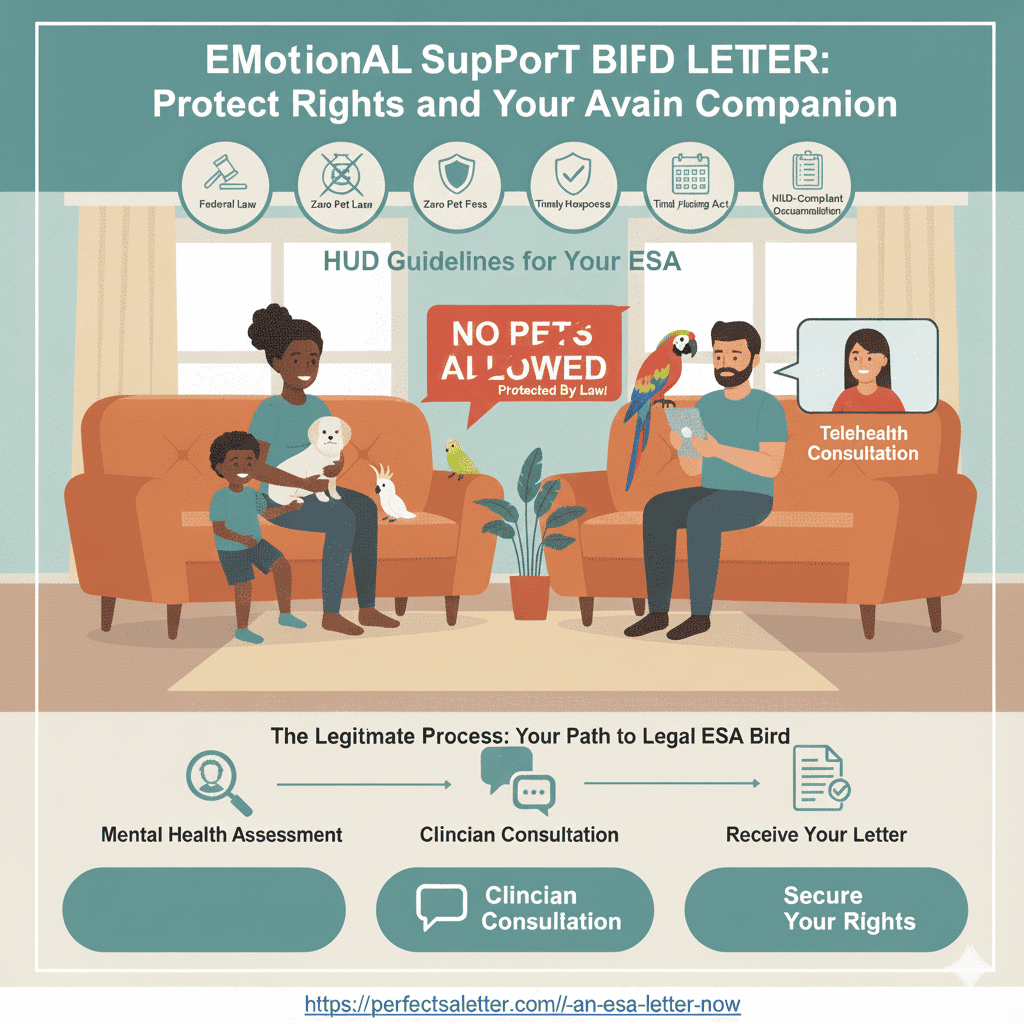
Emotional Support Bird Letter: Protect Your Rights and Your Avian Companion
Emotional Support Bird Letter: Protect Your Rights and Your Avian Companion
For many people struggling with mental health, comfort doesn’t always come in the form of a dog or a cat. Birds—with their high intelligence, vibrant personalities, and unique ability to bond through speech—provide a specialized kind of emotional anchoring. Whether it is a parrot that mimics your laughter or a cockatiel that senses your distress, these animals are vital to your well-being. However, living with a bird in a rental property can be a challenge due to noise concerns or “no-pet” policies. Securing an emotional support bird letter is the essential legal step to ensuring you and your feathered friend can stay together safely and legally.
An emotional support animal (ESA) letter is a legal document that recognizes your bird as an assistance animal rather than a pet. Under federal law, this designation grants you significant housing protections, allowing you to bypass restrictive rules and save money on pet-related expenses. In this comprehensive guide, we will explore the benefits of an emotional support bird, your rights under the Fair Housing Act, and the best way to obtain a legitimate letter.
Why Birds Make Exceptional Emotional Support Animals
While dogs are often the “default” ESA, birds offer distinct therapeutic advantages that make them the perfect companion for individuals with specific mental health needs. An emotional support bird letter validates the clinical necessity of this unique bond.
1. High Empathy and Intelligence
Species like parrots, parakeets, and African Greys are known for their high emotional intelligence. They can often sense shifts in their owner’s mood, offering vocalizations or physical affection to help de-escalate anxiety or depression.
2. Social and Vocal Interaction
For those struggling with social isolation or loneliness, the ability of a bird to respond to speech is life-changing. Engaging in “conversation” with a bird provides a level of interactive companionship that other animals cannot offer.
3. Sensory Grounding
The vibrant colors and rhythmic sounds of a bird can act as a powerful grounding tool. For individuals with PTSD or panic disorders, focusing on the bird’s movements can help break a dissociative episode.
4. Low Physical Impact
Birds are ideal for those who may have physical limitations or smaller living spaces. They do not require outdoor walks, making them a sustainable choice for individuals whose mental health condition makes high-energy pet care difficult.
Legal Protections: The Fair Housing Act (FHA)
When you possess a valid emotional support bird letter, you are protected by the Fair Housing Act. This federal law ensures that individuals with disabilities have equal access to housing.
Key FHA Rights for Bird Owners:
-
No-Pet Policy Exemptions: You can live in apartments or condos that otherwise prohibit pets or have “no-birds” rules.
-
Exemption from Pet Fees: Landlords are legally prohibited from charging upfront pet deposits or monthly pet rent for an ESA.
-
Bypass Species Restrictions: While a landlord might ban certain animals, they must make a “reasonable accommodation” for your bird.
-
Security of Tenure: You cannot be evicted or denied housing simply because you own an emotional support bird.
| Feature | Standard Pet Bird | ESA Emotional Support Bird |
| Housing Rights | Landlord’s Discretion | Federal Legal Right |
| Pet Deposits | Often Required | $0 (Legally Exempt) |
| Monthly Pet Rent | Common | $0 (Legally Exempt) |
| Legal Documentation | None | Official ESA Letter |
How to Get a Legitimate Emotional Support Bird Letter
To be legally recognized, your letter must come from a Licensed Mental Health Professional (LMHP). A “registry” or “ID tag” from a website is not a legal document and will be rejected by landlords.
Step 1: Professional Assessment
You must have a consultation with a clinician—such as a psychiatrist, psychologist, or licensed therapist—who is licensed in your state. This can be done through a secure telehealth platform.
Step 2: Establishing a Nexus
The clinician must determine that you have a mental or emotional disability (as defined by the FHA) and that your bird provides a “nexus,” or a direct therapeutic benefit that alleviates your symptoms.
Step 3: Formal Documentation
If you qualify, the professional will issue a signed letter on their official letterhead. This letter will include their license number, the date of issuance, and a clear statement regarding your need for the animal.
At Perfect ESA Letter, we connect you with qualified professionals who understand the specific needs of avian owners and HUD requirements.
Common Challenges and Landlord Objections
Even with an emotional support bird letter, some landlords may have concerns. Knowing your rights is the best way to handle these situations.
-
Noise Concerns: Landlords often worry about birds being loud. While an ESA is protected, it must still be “manageable.” If a bird is a constant nuisance that disrupts the peace of other tenants, a landlord may have grounds to ask for behavior correction.
-
Property Damage: You are still responsible for any actual damage the bird causes to the unit (such as chewing on wood trim). The landlord can use your standard security deposit for these repairs.
-
Species Bias: A landlord cannot deny your bird just because they “don’t like birds” or think they are “messy.” They must evaluate the request based on your clinical letter.
Internal Linking Suggestions
-
Anchor Text: how to qualify for an emotional support animal
-
Anchor Text: Fair Housing Act protections for ESA owners
-
Anchor Text: getting an ESA letter for exotic pets
Frequently Asked Questions (FAQs)
1. Can any species of bird be an emotional support animal?
Yes. HUD guidelines include birds within the “common household pet” category for assistance animals. Whether it’s a small finch or a large parrot, it can qualify with the right documentation.
2. Do I need to “register” my bird?
No. There is no official federal registry for ESAs. Any site asking you to pay to “register” your bird is a scam. The only document that matters is your emotional support bird letter.
3. Can a landlord ask for my bird’s medical records?
No. Landlords can ask for proof of vaccinations (if applicable locally), but they cannot ask for your personal medical records or the specific details of your diagnosis.
4. Does the letter work for air travel?
Currently, most airlines only recognize dogs as assistance animals for in-cabin travel. While your emotional support bird letter is ironclad for housing, you should check with specific airlines for their current pet policies.
5. Can I have more than one emotional support bird?
Yes. If a clinician determines that you need multiple birds to manage your condition, they can specify this in your letter.
6. Is a telehealth ESA letter legal?
Yes. HUD explicitly accepts letters from healthcare professionals who provide services remotely, provided they are licensed in the state where the tenant resides.
7. What if my landlord has an “allergic” neighbor?
Landlords must try to accommodate both parties. An allergy is generally not a valid reason to deny an ESA unless the situation poses a direct, unresolvable health threat to another tenant.
8. Does the letter expire?
While the FHA doesn’t list an expiration date, most landlords require the letter to be dated within the last 12 months to prove the need is current.
Secure Your Peace and Your Companion Today
Your mental health is a priority, and your bird is a vital part of that equation. You should never have to deal with the stress of choosing between your home and your source of comfort. By obtaining a legitimate emotional support bird letter, you gain the legal protection you need to live a peaceful, fee-free life with your avian companion.
At Perfect ESA Letter, we make the process simple, secure, and fully compliant with federal law. Our network of compassionate, licensed professionals is ready to help you secure the rights you and your bird deserve.