
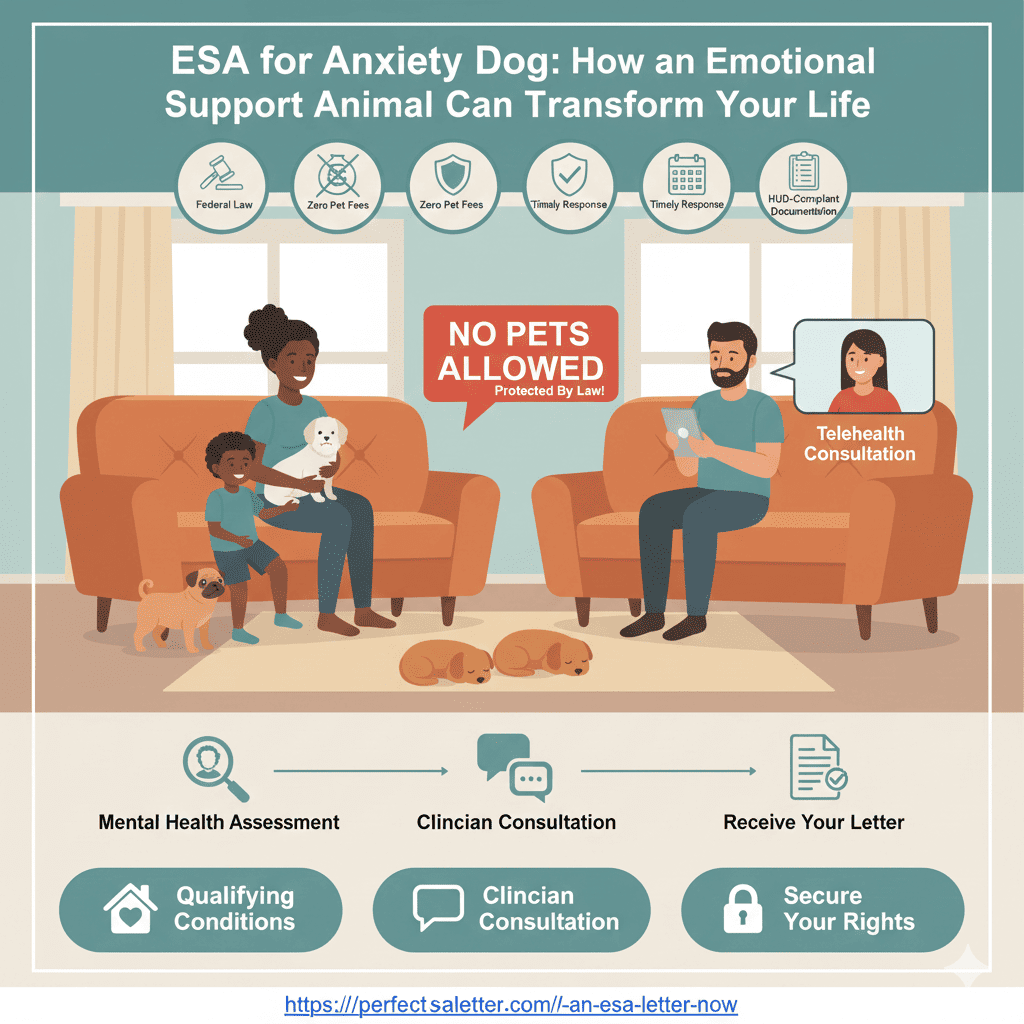
ESA for Anxiety Dog: How an Emotional Support Animal Can Transform Your Life
ESA for Anxiety Dog: How an Emotional Support Animal Can Transform Your Life
Anxiety can often feel like a constant, uninvited guest, making even the simplest daily tasks feel overwhelming. For many, the traditional path of therapy and medication is only part of the solution. If you find that your canine companion is the only thing that truly grounds you during a panic attack or a high-stress day, you are already experiencing the power of an ESA for anxiety dog.
An emotional support animal (ESA) is more than just a pet; they are a vital part of a mental health treatment plan. Under federal law, having an ESA provides you with significant housing protections, ensuring that your source of comfort is never separated from you due to “no-pet” policies or expensive fees. In this guide, we explore the science behind how dogs alleviate anxiety and the legal steps you need to take to protect your rights.
The Science: How an ESA for Anxiety Dog Helps
It’s not just in your head—science confirms that dogs have a physiological impact on human anxiety. Interacting with an ESA for anxiety dog triggers a cascade of positive chemical reactions in the brain that help regulate your nervous system.
1. The Oxytocin Boost
When you pet or gaze into the eyes of your dog, your brain releases oxytocin, often called the “love hormone.” Oxytocin promotes feelings of trust, relaxation, and bonding, which directly counteracts the “fight or flight” response associated with anxiety.
2. Cortisol Reduction
Studies from institutions like Johns Hopkins University have shown that spending just ten minutes with a dog can significantly lower levels of cortisol, the body’s primary stress hormone. For someone with an anxiety disorder, this reduction can be the difference between a spiral and a state of calm.
3. Tactile Grounding
During a panic attack, many individuals experience dissociation or a loss of touch with reality. The physical presence of a dog—the weight of their head on your lap or the sensation of their fur—provides sensory grounding, helping you stay present in the moment.
Legal Protections for Your ESA
Possessing a valid ESA for anxiety dog letter unlocks protections under the Fair Housing Act (FHA). These laws ensure that individuals with mental health disabilities have equal access to housing.
Benefits of a Legitimate ESA Letter:
-
Exemption from “No-Pet” Policies: You can live in apartments, condos, and houses that otherwise prohibit animals.
-
Waiver of Pet Deposits: Landlords are prohibited from charging upfront fees for an ESA.
-
Elimination of Monthly Pet Rent: You save hundreds of dollars annually by bypassing pet surcharges.
-
No Breed or Weight Limits: Even if a building bans certain breeds, they must accommodate your specific ESA unless it poses a documented safety threat.
| Feature | Standard Pet | ESA for Anxiety Dog |
| Housing Access | Restricted by Landlord | Protected by FHA Law |
| Monthly Fees | Common ($25-$100+) | $0 (Legally Exempt) |
| Security Deposit | Required | $0 (Legally Exempt) |
| Legal Documentation | None | Required (ESA Letter) |
How to Qualify for an ESA for Anxiety Dog
To legally qualify for an ESA for anxiety dog, you must have a mental health condition that is documented by a licensed professional. You do not need to “register” your dog on a website; instead, you need a clinical evaluation.
Step 1: Speak with a Licensed Professional
You must consult with a Licensed Mental Health Professional (LMHP) such as a therapist, psychologist, or psychiatrist. This can be done via a secure telehealth platform.
Step 2: Establish a Disability-Related Need
The professional will determine if your anxiety meets the criteria for a disability under the FHA and if your dog provides a specific therapeutic benefit that alleviates your symptoms.
Step 3: Receive Your HUD-Compliant Letter
A valid letter must be written on the clinician’s official letterhead and include their license number, state of licensure, and contact information. This is the only document a landlord is required to accept.
At Perfect ESA Letter, we facilitate this entire process by connecting you with state-licensed professionals who specialize in ESA evaluations.
Avoiding ESA Scams: What to Look For
The internet is full of “registry” sites that promise instant ID cards and vests. These are not legal documents. Landlords are increasingly savvy and will reject “certificates” from sites that do not involve a real clinical evaluation.
-
Registry/ID Cards: There is no official federal registry. These items have no legal standing.
-
Instant Approval: A legitimate clinician must review your case. “Instant” usually means “fraudulent.”
-
No Doctor Contact: If you didn’t speak with a licensed professional, the letter is not valid.
Internal Linking Suggestions
-
Anchor Text: how to qualify for an emotional support animal
-
Anchor Text: Fair Housing Act for ESA owners
-
Anchor Text: ESA dog letter vs. service dog
Frequently Asked Questions (FAQs)
1. Does an ESA for anxiety dog need special training?
No. Unlike service dogs, which must be trained to perform specific tasks, an ESA provides comfort simply through its presence. No specialized training is required for them to be legally recognized.
2. Can my landlord ask for my medical records?
No. Under HUD guidelines, your landlord is entitled to a valid ESA letter, but they cannot ask for your specific diagnosis, medical history, or a demonstration of the dog’s “tasks.”
3. Is a telehealth ESA letter legal?
Yes. HUD explicitly recognizes telehealth as a legitimate way to establish a provider-patient relationship. As long as the clinician is licensed in your state, the letter is valid for housing.
4. Can I have an ESA for anxiety dog in a dorm?
Yes. The Fair Housing Act applies to university housing and dormitories. Students with a valid ESA letter are entitled to have their support animal live with them on campus.
5. What if my landlord refuses my letter?
If you have a legitimate letter from a licensed professional, a landlord who refuses it may be in violation of federal law. You can file a complaint with HUD’s Office of Fair Housing and Equal Opportunity.
6. Can a landlord charge a “cleaning fee” for my ESA?
A landlord cannot charge an upfront cleaning fee or deposit. However, if your ESA causes actual damage to the unit, you are still financially responsible for those repairs at the end of your lease.
7. Do I need to buy a vest or harness for my dog?
No. Vests and harnesses are optional and do not grant legal status. Your ESA for anxiety dog is protected by the letter, not by the gear they wear.
8. How long does the letter last?
While the FHA does not specify an expiration date, most landlords request a letter dated within the last 12 months to ensure the clinical need is current.
Take the Next Step Toward Peace of Mind
Anxiety shouldn’t be the reason you lose your home or your best friend. Your ESA for anxiety dog is a vital part of your health, and the law is on your side. By obtaining a legitimate, clinician-backed ESA letter, you can stop worrying about “no-pet” rules and start focusing on your well-being.
At Perfect ESA Letter, we make the path to legal housing protection simple, secure, and fully compliant. Our network of compassionate professionals is ready to help you secure the rights you and your dog deserve.