
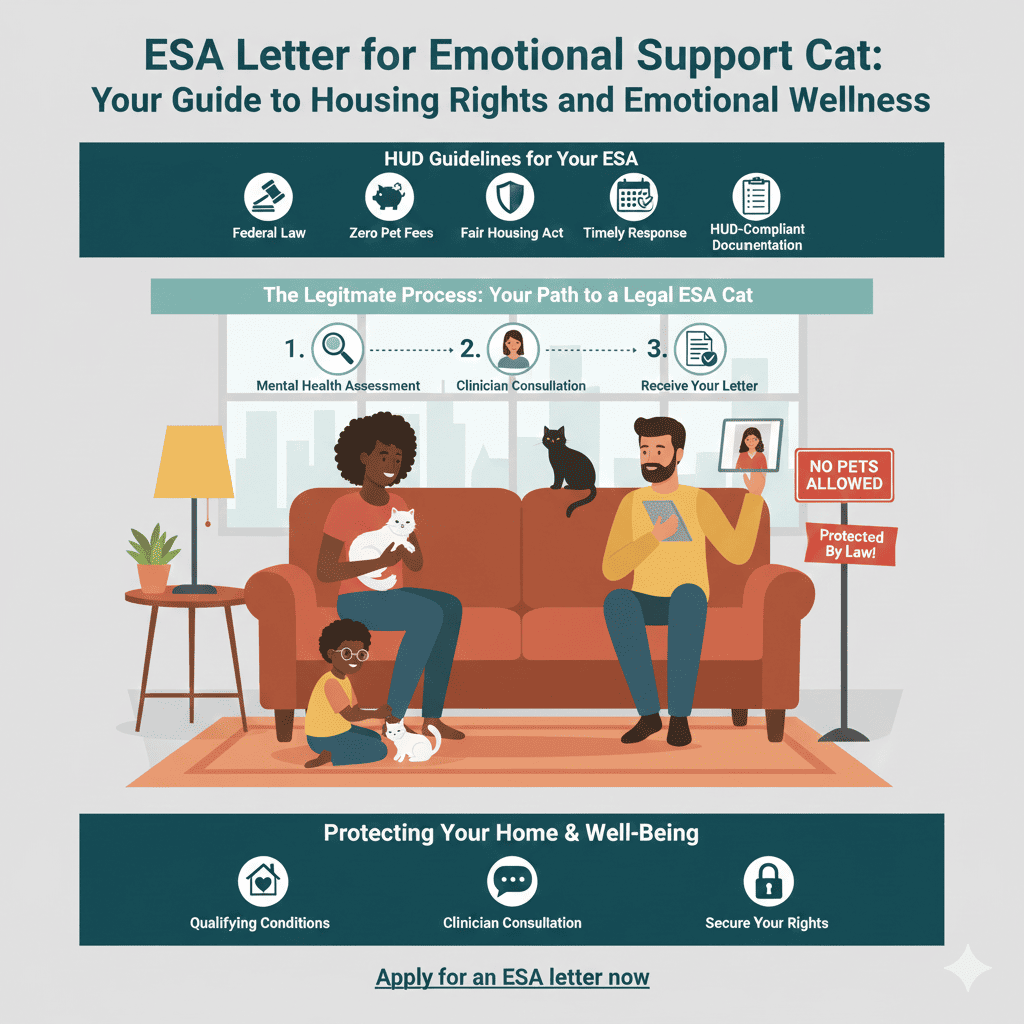
ESA Letter for Emotional Support Cat: Your Guide to Housing Rights and Emotional Wellness
ESA Letter for Emotional Support Cat: Your Guide to Housing Rights and Emotional Wellness
For many individuals, the quiet companionship of a feline friend is more than just a hobby; it is a vital therapeutic intervention. The gentle purr of a cat or the routine of care can provide immense relief for those struggling with mental health challenges. If you rely on your feline for stability, obtaining an ESA letter for emotional support cat is a critical step in ensuring that you and your companion remain together, regardless of restrictive housing policies.
Under the Fair Housing Act (FHA), emotional support animals (ESAs) are recognized as essential assistance animals rather than mere pets. This legal distinction allows you to live in “no-pet” housing and exempts you from paying extra pet-related fees. However, to access these protections, you must provide your landlord with a valid recommendation from a licensed professional. In this guide, we will explore the therapeutic benefits of cats, the legal landscape of housing, and how to secure a legitimate letter.
The Therapeutic Power of an Emotional Support Cat
While dogs are often the first animals people associate with assistance, cats offer unique therapeutic benefits that are particularly helpful for certain mental health conditions. An ESA letter for emotional support cat recognizes that these animals are not just roommates—they are a part of a medical treatment plan.
Key Benefits of Feline Companionship:
-
Lowering Blood Pressure: Studies have shown that petting a cat can significantly reduce stress and lower heart rates.
-
Non-Judgmental Support: For individuals with social anxiety or depression, a cat offers a consistent, comforting presence that requires no social performance.
-
Grounding for PTSD: The tactile sensation of soft fur and the vibration of a purr can provide a powerful grounding effect during flashbacks or panic attacks.
-
Manageable Responsibility: For those with executive dysfunction, the relatively low-maintenance nature of a cat provides a sense of purpose without becoming overwhelming.
Why You Need a Legitimate ESA Letter for Emotional Support Cat
A housing provider is not legally required to accept your animal based on a “registry certificate” or a vest bought online. To be legally compliant with Department of Housing and Urban Development (HUD) guidelines, you must have an ESA letter for emotional support cat issued by a Licensed Mental Health Professional (LMHP).
What Makes a Letter Legitimate?
-
Licensed Clinician: The letter must be written by a professional licensed in your state (e.g., Psychologist, LCSW, LMFT, or Psychiatrist).
-
Clinical Assessment: The professional must have evaluated your mental health and confirmed a diagnosis.
-
The “Nexus”: The letter must explain the link between your disability and the support the cat provides.
-
Official Credentials: It must include the clinician’s license number, contact info, and signature on their official letterhead.
Your Legal Rights Under the Fair Housing Act
The Fair Housing Act is a federal law designed to prevent discrimination in housing. When you possess a valid ESA letter for emotional support cat, you are entitled to several “reasonable accommodations”:
1. Bypass “No-Pet” Policies
Even if an apartment complex or rental home has a strict “no animals” rule, they must make an exception for your ESA.
2. Exemption from Pet Fees
You cannot be charged a pet deposit, an application fee for the animal, or monthly pet rent. This can save you thousands of dollars over the duration of your lease.
3. No Breed or Size Restrictions
While this is more common for dogs, it applies to cats as well. A landlord cannot deny your cat based on its breed or weight.
4. Privacy Protections
Landlords are prohibited from asking for your detailed medical history or the specific nature of your diagnosis. They are only entitled to the information provided in your ESA letter.
How the Clinician Evaluation Process Works
Securing an ESA letter for emotional support cat through Perfect ESA Letter is designed to be ethical, legal, and stress-free.
Step 1: Online Pre-Screening
You begin by filling out a confidential mental health assessment. This helps our clinicians understand your history and the symptoms you are experiencing, such as chronic stress, insomnia, or anxiety.
Step 2: Telehealth Consultation
You will meet with a licensed professional via a secure telehealth platform. This evaluation is necessary to satisfy HUD’s requirement for a “provider-patient relationship.”
Step 3: Approval and Issuance
If the clinician determines that an emotional support cat is beneficial for your condition, they will draft and sign your letter. You will typically receive a digital copy almost immediately, followed by a hard copy if requested.
Comparing Legitimate Services vs. Fraudulent Registries
It is vital to distinguish between a medical evaluation service and a “letter mill.” Using a fraudulent site can lead to your accommodation request being denied or, in some states, legal penalties.
| Feature | Legitimate Clinician Service | Fake Registry Site |
| Provider | State-Licensed LMHP | Automated Software |
| Process | Clinical Consultation | “Pay and Download” |
| HUD Compliant | Yes | No |
| Accepted by Landlords | Yes | Frequently Rejected |
| Support | Verification Support Included | No Follow-up |
Internal Linking Suggestions
-
Anchor Text: how to qualify for an emotional support animal
-
Anchor Text: difference between service dogs and ESAs
-
Anchor Text: state-specific ESA laws
Frequently Asked Questions (FAQs)
1. Can a landlord deny my ESA cat?
A landlord can only deny an ESA if the animal poses a direct threat to the safety of others, causes substantial physical damage to the property, or if the accommodation would cause “undue financial hardship” to the owner.
2. Does my cat need to be “certified” or “registered”?
No. There is no official government registry for emotional support animals. The only legal document required is an ESA letter for emotional support cat from a licensed professional.
3. Is an ESA letter from a telehealth service valid?
Yes. HUD explicitly recognizes that a legitimate clinical relationship can be established via telehealth, as long as the provider is licensed in your state of residence.
4. What if I already have two cats?
If a clinician determines that both animals are necessary for your mental health (for instance, if they provide different types of support), they can write a letter justifying multiple ESAs.
5. Do I have to disclose my ESA before I sign a lease?
You are not required to disclose your ESA during the application process. Many tenants wait until the lease is signed to avoid potential (though illegal) discrimination from landlords.
6. Can I get an ESA letter for my cat even if I don’t have a therapist?
Yes. Services like ours connect you with licensed professionals who can perform the necessary evaluation even if you don’t currently have a regular therapist.
7. Does my ESA cat have public access rights like a service dog?
No. An ESA letter for emotional support cat provides housing rights only. It does not grant the right to take your cat into grocery stores, restaurants, or on airplanes (as of recent airline policy changes).
8. How long is my ESA letter valid?
While the FHA does not set an expiration, most landlords request a letter that has been issued within the last 12 months to ensure the clinical need is still current.
Protect Your Wellness and Your Home Today
The bond between you and your cat is a powerful tool for your mental health. You should never have to endure the stress of housing instability or unfair fees because of your need for support. By obtaining a legitimate ESA letter for emotional support cat, you take a proactive step in securing your rights and ensuring a peaceful home for both you and your feline companion.
At Perfect ESA Letter, we specialize in making the process of connecting with a licensed professional simple and secure. Our clinicians understand the nuances of the Fair Housing Act and are dedicated to providing the documentation you need to live life on your terms.